


The Chippendale Silhouette: A Classic Lattice for the Modern Porch
TL;DR: Chippendale outdoor furniture has carried the same geometric lattice for more than two and a half centuries, and it still looks right on a modern porch. This post covers where the pattern came from, why it works with contemporary design and a few ways to style it at home.
Familiar at First Glance
Most people recognize the Chippendale lattice long before they learn its name. They’ve seen it on the back of a garden bench or a chair on a hotel veranda, a pattern of crossing lines that looks as right today as it did generations ago. It’s the reason Chippendale outdoor furniture feels familiar the first time you sit in it.
Where the Lattice Began
The pattern takes its name from Thomas Chippendale, a Yorkshire-born cabinetmaker who set up shop on London’s St Martin’s Lane. In 1754 he published The Gentleman and Cabinet-Maker’s Director, one of the most influential furniture pattern books ever printed, and among its pages were chairs in the Chinese taste, their backs filled with geometric fretwork. Europe was in love with Chinese porcelain and lacquer at the time, so the designs caught on quickly, and craftsmen on both sides of the Atlantic made them their own. Today we call the style Chinese Chippendale.
Two and a half centuries later, the lattice still earns its place on the porch, and the reasons are worth a closer look.

Why the Lattice Still Works
Design tends to last when it’s built on simple geometry, and the Chippendale lattice is exactly that. Straight lines cross at confident angles inside a clean rectangular frame, so the pattern reads as orderly even from across the lawn. It brings detail to a chair without anything fussy, which is why it looks as at home beside a Greek Revival house as it does on a new build with black window frames.
Made for Light and Shadow
Outdoors, the lattice does something a solid back can’t. Light passes through it, so a pair of chairs never feels heavy on a narrow porch, and on a sunny afternoon the pattern repeats itself as a shadow across the floorboards. That shadow shifts as the day goes on, growing longer and softer by evening. Few pieces of furniture change so much with the hour while staying exactly where you put them.
Pairing Chippendale With Contemporary Pieces
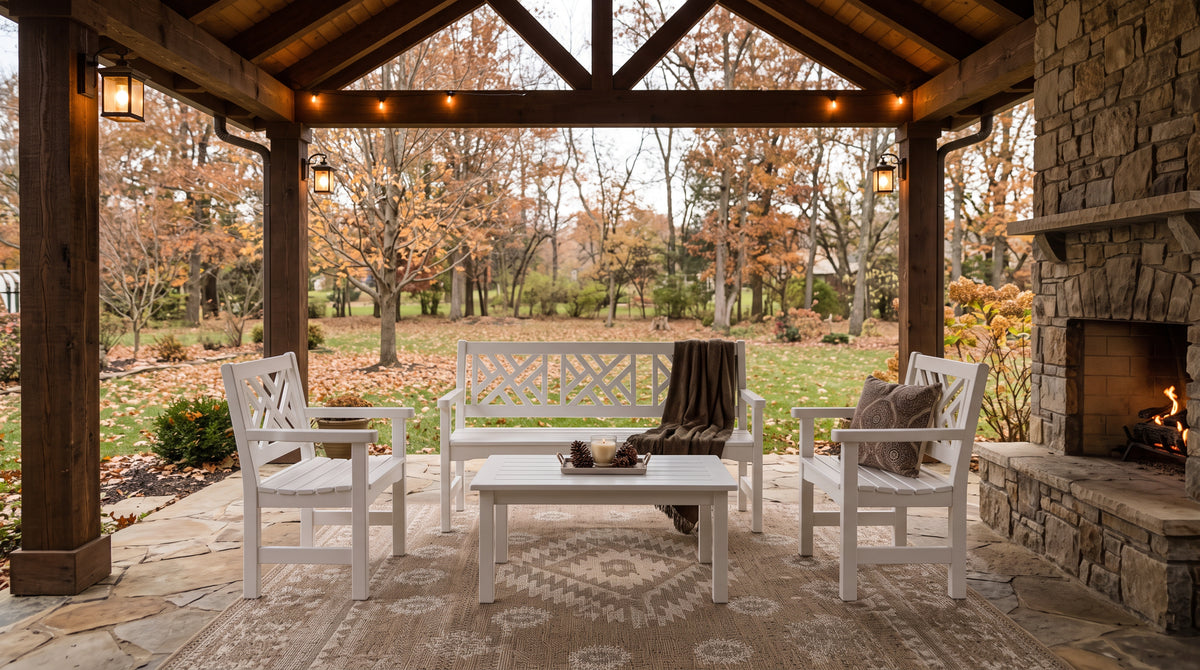
The lattice is a strong pattern, so it looks best with a little breathing room. On a modern porch or terrace, let one or two Chippendale pieces carry the detail and keep the furniture around them simple, like a clean-lined sofa with solid-colored cushions. The contrast makes both look more deliberate. A single Chippendale chair beside a contemporary sectional reads as a collected piece, much the way an antique chair does in a modern home.
Color helps too. A white lattice against dark siding or black window frames looks crisp and architectural, and a Chippendale coffee table can tie a mixed seating group together without asking everything around it to match.

Where Chippendale Looks Best
Chippendale is at its best in places with a little structure. A walled courtyard or a brick terrace gives the lattice straight lines to echo, and a few chairs gathered around a table there feel settled and gracious, like a corner of an old townhouse garden.
By a pool house, a white lattice against blue water and pale stone looks bright and crisp, and it brings classic detail to a setting that often leans modern. On a rooftop terrace, a pair of Chippendale chairs softens the glass and steel around them and gives the space a sense of history.
The pattern also loves greenery. Set against a clipped hedge or beneath a pergola heavy with wisteria, the lattice reads like part of the garden’s own design. It’s why Chippendale has been a garden classic for so long, and why it looks just as right at a country house as it does in the city.
Inspired by America’s Front Porch
Our own collection takes its name from the Grand Hotel on Mackinac Island, where lattice-backed chairs and benches have welcomed guests to its famous porch for generations. What strikes us most there is how much the porch relies on repetition. The same few classic forms, in the same crisp white, line the rail and gather around low tables, and the whole porch feels calm and unhurried because of it. We wrote more about that porch, and how to design one of your own, in Designing an Heirloom Porch.
Robinia or Teak
Our Grand Hotel Chippendale collection is made from solid Robinia, a naturally weatherproof hardwood we’ve written about in why Robinia is the best wood for outdoor furniture. Robinia also takes paint beautifully, which is why the collection works so well in classic white. The collection includes a chair, a bench in two lengths, a coffee table and a planter, and the Chippendale lounge set brings the seating and table together as one group.
For a warmer, natural look, Kingsley Bate’s Chippendale collection brings the same lattice to solid teak. Its garden armchair and benches show off the grain, and over the years the honey color weathers to a soft silver-gray that looks lovely in a garden or beside a pool. Fitted seat cushions are available for a softer seat.

Styling Chippendale at Home
A pair of chairs flanking the door. Two Chippendale chairs on either side of a front door frame the entrance the way a pair of lanterns does. It’s a formal gesture and a welcoming one. Angle the chairs slightly toward each other and the doorway becomes a place where friends and family stop to talk.
A bench along a garden path. A Chippendale bench set partway down a garden path gives the walk a destination. Place it where the path widens or turns, backed by a hedge or a border of tall plants, so the lattice stands out against the green. It’s a seat people find on their own, with coffee in the morning or after dinner as the light fades.
Planters at the entrance. Planters are where the lattice meets the garden. A Chippendale planter on each side of the steps or a garden gate repeats the pattern at ground level and gives the entrance structure all year, whether it holds clipped boxwood or a new planting each season. Our guide to styling a patio with outdoor planters has more ideas.

Frequently Asked Questions
Who was Thomas Chippendale?
An English cabinetmaker, born in Otley, Yorkshire, in 1718. He ran his London workshop from St Martin’s Lane and published The Gentleman and Cabinet-Maker’s Director in 1754, with new editions in 1755 and 1762. He died in 1779, and his name has been attached to a whole era of furniture design ever since.
What’s the difference between Chippendale and Chinese Chippendale?
Chippendale is the broader style, which also includes carved rococo and Gothic designs. Chinese Chippendale refers to the pieces inspired by the 18th-century fashion for Chinese art, and you’ll know them by their geometric lattice or fretwork. Most outdoor Chippendale furniture, ours included, follows the Chinese Chippendale tradition.
Does Chippendale furniture work with a modern home?
Yes, and often beautifully. Its geometry is clean enough to sit beside contemporary pieces, especially when it’s the only patterned piece in the group.
Can Chippendale outdoor furniture stay outside year-round?
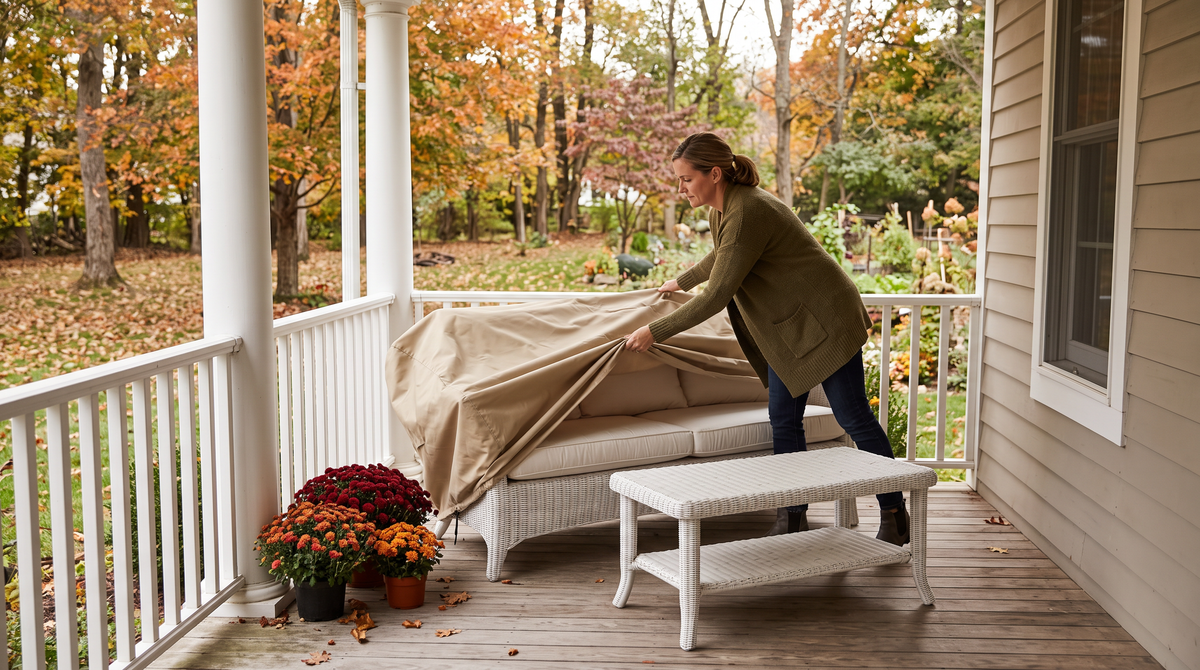
In solid Robinia or teak, yes. It’s a fair question for any piece with this much detail, but both are dense hardwoods that handle rain and sun without coming indoors, and Robinia is rated Class 1, the highest natural durability class for wood. A cover through the hardest winter months and an occasional cleaning keep the lattice looking crisp. Our guide to caring for wooden outdoor furniture covers the details.
The Chippendale lattice has welcomed people outdoors for more than two and a half centuries, and it has plenty of summers left in it. Explore our collections and create your perfect outdoor retreat.
Explore More