
How Do You Choose the Right Outdoor Furniture Cover?
TL;DR: The right outdoor furniture cover fits your piece closely and lets moisture escape while keeping rain out. This guide walks through custom and universal fits, breathable fabrics, waterproofing, tie-downs and measuring.
Made to Last, Worth Protecting
The finest outdoor furniture is built to be enjoyed for decades, and well-chosen outdoor furniture covers help it look its best through every one of them. A teak sofa or a solid Robinia rocker can stand up to the seasons on its own. A cover keeps the finish fresh and the cushions clean, so each spring picks up right where last summer left off.
November is when the cushions come in, the covers go on and the patio rests until the first warm weekend. We’ve spent over three decades helping homeowners and designers choose outdoor furniture they’ll keep for a lifetime, and here’s what we look for in a cover worth putting on it.

Custom Fit or Universal
A cover works best when it fits the piece beneath it. Custom-fit covers are cut to the shape of a particular chair, sofa or table, so they sit close without loose fabric for the wind to catch. Rain runs off instead of collecting in folds, and the cover looks tailored on the patio all winter.
Universal covers come in general sizes, like a small or large lounge chair, and they’re designed to fit many pieces reasonably well. They can be a practical choice for an unusual piece or one without a matched cover. The trade-off is fit, since extra fabric tends to sag where water can pool and a cover that’s too snug strains at the seams. For furniture you plan to keep for years, a cover made for that exact piece is worth finding.
Choose Brand-Matched Covers
For Kingsley Bate and Barlow Tyrie furniture, the best fit comes from the maker. Both design covers piece by piece for their own collections, so each one follows the lines of the seat or table it was made for.
Kingsley Bate covers are made from solution-dyed polyester and fasten with easy buckles. Each is matched to specific collections, from Sag Harbor and Southampton deep seating to Chelsea and Nantucket, so finding yours is as simple as knowing the name of your set.
Barlow Tyrie covers are made from WeatherMAX-LT, a lightweight, UV-resistant fabric that’s one-way breathable: moisture can escape from inside, while rain and dust stay out. Each cover lists the model numbers it fits, from Monterey deep seating to Equinox stacking chairs, and a secure fastening keeps it in place through blustery weather.
We recommend brand-matched covers to anyone who owns either brand. Exact fit is the most important thing a cover can offer, and no one knows the shape of a Kingsley Bate lounge chair or a Barlow Tyrie dining table better than the people who build them.
Covers for Frontera Rockers
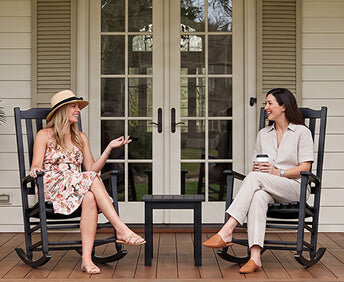
Our Robinia rockers are weatherproof and perfectly happy to stay outside all year. A cover is how you keep the finish looking the way it did the day your rocker arrived, and keep falling leaves and pollen off the seat until you’re ready to settle back in.
The Cover for Frontera Rockers is tailored by Seal Skin Covers specifically for the World’s Finest Rocker and the Americana Resort Rocker. It’s waterproof, with breathable vents that let air move underneath, and a drawstring stretches around the ends of the runners for a close fit. It also carries a lifetime limited warranty, which feels right for a chair meant to stay in the family. A cover for the Americana Side Table finishes the pair.

Breathable Fabric Over Plastic
A plastic tarp keeps rain off, but it also seals in whatever moisture is already on the furniture. That dampness has nowhere to go, and as the days warm and the nights cool, condensation forms on the underside. It’s how mildew finds its way onto cushions and how a lovely finish ends up spotted by spring.
Breathable covers let water vapor escape while the outer face sheds rain. Look for words like breathable, vented or one-way breathable in the description, and for vents near the top of taller pieces, where warm, damp air collects. The covers we carry are all made from outdoor fabric rather than plastic sheeting.
How Waterproof Should It Be?
It’s natural to want the most waterproof cover you can find, but the best covers balance two jobs. The outside needs to shed rain and snowmelt, and the fabric needs to breathe so moisture underneath can escape. A heavy rubberized cover handles the first and struggles with the second.
You’ll see covers described as waterproof, water resistant or water repellent. In practice, a quality cover with well-made seams keeps furniture dry through a wet winter, especially when it’s shaped so water runs off. That’s where fit matters again. Rain that pools in a slack spot will eventually work its way through almost any fabric, which is why Kingsley Bate includes tenting devices with some of its covers to lift the center and keep water moving. UV resistance is worth looking for too, so the fabric holds its color through bright winter afternoons.
Tie-Downs That Hold
A cover can only protect what it stays on. Winter wind gets under loose fabric and works it back and forth, wearing the cover and sometimes lifting it away entirely after a storm.
Look for a way to fasten the hem, whether that’s buckle straps that clip around the legs or a drawstring that pulls snug. On sofas and chaise lounges, straps at the legs do most of the work. On a rocker, a drawstring around the runner ends keeps the cover from riding up when the wind picks up.
Covering Sofas and Deep Seating
Deep seating asks the most of a cover, since cushions hold on to moisture longer than a frame does. Our sofa covers and deep seating chair covers are each made for named collections, so you can match the cover to your set rather than guessing from a size chart.
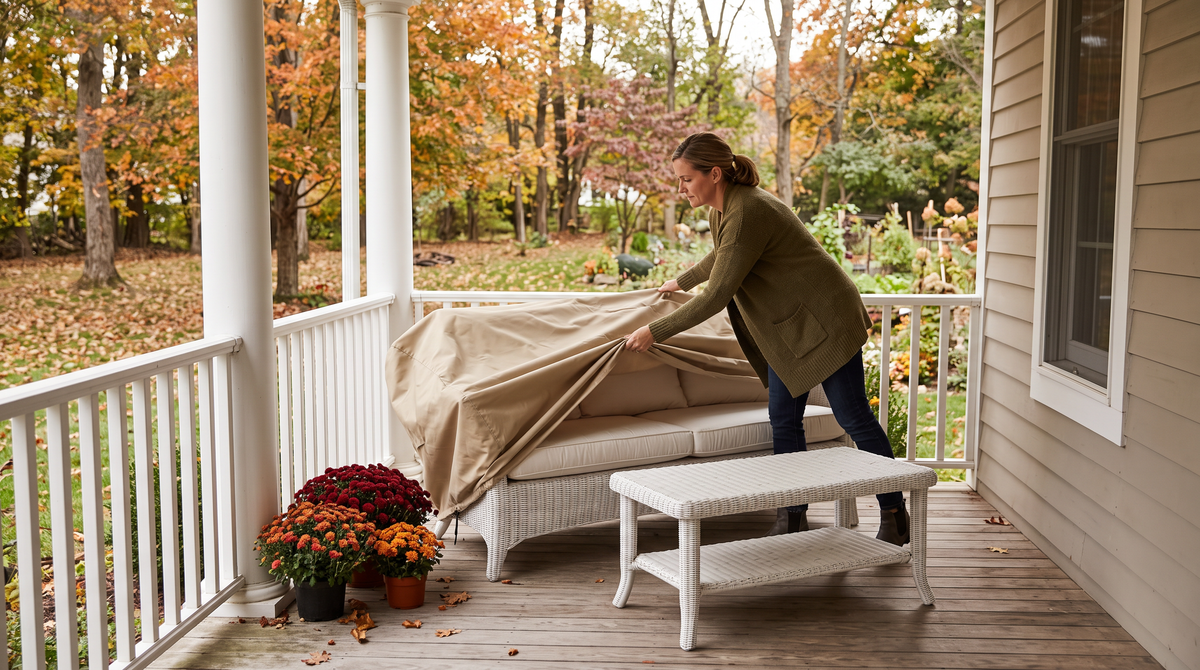
Some homeowners bring their cushions indoors for winter and cover the frames, while others in milder climates leave cushions in place under a breathable cover. Either works well with a cover cut for the piece.
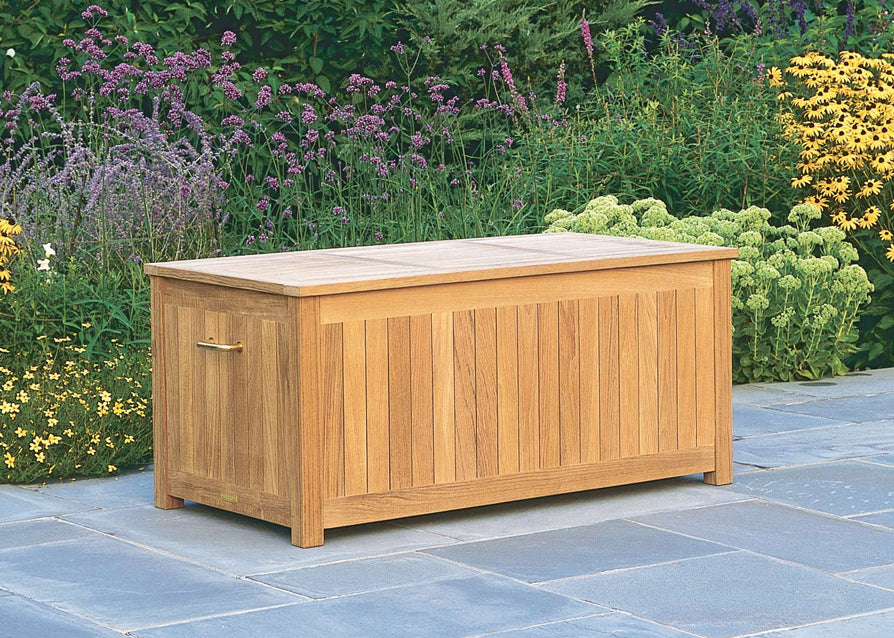
A cushion box offers a third option, keeping cushions dry and close at hand without taking up room in the garage. Our storage boxes include Kingsley Bate’s cushion boxes in teak and Sag Harbor wicker and Barlow Tyrie’s teak storage chest, all made to sit on the patio alongside the furniture they serve. When the first warm weekend arrives, the cushions are right there, ready to go back on.

How to Measure for a Cover
When there isn’t a cover made for your exact model, measure before you buy. Take each measurement at the widest point of the piece: width from arm to arm, depth from the front of the seat to the back of the frame and height from the ground to the top of the back. Include the cushions if they’ll stay on through winter.
Compare your numbers with the cover’s listed dimensions and choose one with a little extra room, enough that it slips on easily without bunching. For sectionals, measure each piece on its own. Kingsley Bate makes covers for individual sectional chairs, corners and ottomans, so a whole arrangement can be covered piece by piece.
Before the Covers Go On
A cover holds furniture just as you left it, so it’s worth starting clean and dry. Brush away the leaves, let everything dry fully on a sunny afternoon and give wooden pieces their seasonal care first. Our guide to caring for wooden outdoor furniture covers the details. Then pull the covers on, fasten them snug and let the patio rest until spring.
Frequently Asked Questions
Do I need to cover teak or Robinia furniture in winter?
Not strictly. Robinia is weatherproof and teak is naturally weather resistant, so both can stay outside uncovered all year. Left uncovered, teak weathers to a soft silver-gray, which many people love. A cover keeps the original color longer and keeps leaves, pollen and grime off the surface, so there’s less to do in spring. Our guide to weatherproof vs. weather-resistant furniture explains the difference.
Can I put a cover on wet furniture?
It’s best to wait for a dry day. A short spell under a breathable cover won’t hurt, but weeks of trapped moisture is how mildew starts.
How much bigger should a cover be than my furniture?
For a universal cover, about one to two inches larger than your measurements in each direction is a good rule. That’s enough room to slip it on easily without leaving slack for rain to pool or wind to catch. A custom or brand-matched cover takes the guesswork out entirely.
Should I cover furniture on a covered porch?
Usually, yes. A porch roof keeps off direct rain, but wind-blown rain, dust and pollen still settle on everything over a long winter. This is the question we hear most from homeowners with deep porches, and a light, breathable cover is often all they need.
How do I store covers in summer?
Shake them out, let them dry completely and fold them somewhere cool and dry. Barlow Tyrie notes that the life of a cover depends a great deal on how it’s used and cared for, and a clean, dry cover put away well is ready for many winters to come.
A cover that fits well is one of the simplest ways to look after furniture you plan to enjoy for decades. Explore our collections and create your perfect outdoor retreat.
Explore More