


How Do You Protect a Patio Umbrella for Winter

TL;DR: To protect a patio umbrella for winter, clean and fully dry the canopy, close it under a fitted, breathable cover and store it somewhere dry or leave it secured on a properly weighted base. A few simple steps now keep your umbrella ready for the first warm weekend of spring.
Ready When the Sun Returns
The care a patio umbrella gets over the colder months decides how it looks when you open it again. A canopy that goes under cover clean and dry comes back bright and ready, while one left damp or exposed tends to show it in faded fabric, mildew spots or a stiff crank.
We’ve spent over three decades helping homeowners and designers choose patio umbrellas that suit the way they live outdoors, and caring for one between seasons is simpler than most people expect. It mostly comes down to a clean, dry canopy and an umbrella cover made for your model. Here are the steps we recommend that can be applied to any umbrella we carry.

Pick a Dry, Calm Day
The best time to put an umbrella away is a little before you have to. Once the evenings turn cool and the umbrella sees more rain than sun, choose a dry, still afternoon so the fabric has time to air out before it’s covered. Waiting for the first hard freeze or a windy night usually means packing away a canopy that’s still damp, and that’s where most winter damage begins.
Clean and Dry the Canopy
Open the umbrella fully and brush away leaves and pollen. Most premium canopies are woven from solution-dyed acrylic, which holds its color beautifully and only needs a soft brush and a little mild soap in lukewarm water. Rinse it well, then leave it open in the sun until it’s completely dry. Even a trace of moisture trapped under a cover can turn into mildew by spring, so give it the whole afternoon if you can.

Care for Your Umbrella’s Frame
While the canopy dries, look over the frame. Aluminum poles and ribs only need a wipe with a damp cloth and a quick check that the crank and hinges still move smoothly. If something feels loose, now is the time to tighten it, while there’s plenty of time before you’ll want shade again.
A teak pole deserves the same attention as teak furniture. The octagon market umbrellas from Kingsley Bate are made with teak poles that pair beautifully with their dining sets, and a light cleaning with Golden Care Teak and Hardwood Cleaner lifts the summer’s grime so the wood rests clean through the colder months.
Bring In Your Umbrella Light
Anything with a battery is best brought inside for the winter. If you’ve added an umbrella light like Treasure Garden’s EVO Light and Sound Pod, unclip it from the pole before the cover goes on. It’s water resistant for summer evenings, but long months of cold aren’t kind to a rechargeable battery. Give it a full charge and keep it somewhere dry indoors, so it’s ready the first night you want to linger outside after dark.

Choose a Cover Made for Your Umbrella
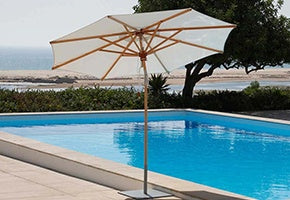
A fitted cover is the most useful thing you can give an umbrella over winter. It keeps rain and grime off the folded canopy and stops the wind from working the fabric loose. Look for one that’s breathable as well as water resistant, so any moisture can escape rather than collect inside.
Each of the shade makers we carry offers covers shaped to its own designs. Treasure Garden makes its covers from a breathable, PFAS-free fabric with a spring cinch that holds them snug, and each one folds into its own storage bag for summer. Shademaker and Jardinico design covers for individual umbrella models, so matching the cover to your model name or number gives the cleanest fit. Kingsley Bate covers are sized to its market umbrellas, which makes choosing one as simple as knowing your canopy size.
Plan for Your Climate
Where you live shapes how much your umbrella needs over the winter. In the milder parts of the South and along the West Coast, a closed and covered cantilever on a well-weighted base can usually stay out all season, and you may find yourself opening it on a bright afternoon in January.
Coastal homes have one extra step. Salt air leaves a fine film on the frame and fabric, so rinse both with fresh water and let them dry completely before the cover goes on. It keeps the hinges moving freely and the canopy looking crisp in spring.
Where snow and ice are a regular part of winter, plan to bring everything but the base indoors. Choose your dry day early, before the first storm makes the decision for you.
Store It or Leave It Out
Where your umbrella spends the winter depends on your climate and its design. Market umbrellas are easiest to bring inside to a garage or dry shed. Store yours closed and covered, either standing upright or lying flat on a shelf, and keep it off bare concrete, which holds cold and damp. A spot where it won’t get bumped by bikes or tools keeps the ribs straight.
Cantilever umbrellas are larger and often stay where they are, which works well in milder climates. Close the canopy, fasten its strap, add the cover and make sure it sits on a properly weighted umbrella base or mount. Where winters bring heavy snow or strong wind, it’s worth taking the canopy indoors, since wet snow settling on folded fabric can strain the ribs over time.

Look After Your Umbrella’s Base
The base carries the umbrella through every breezy afternoon of summer, and it deserves a few minutes of care too. Brush out the leaves and soil that gather around the pole sleeve, and check that the tightening knob still turns freely. Many of Shademaker’s cast aluminum bases sit on wheels, so they can roll into the garage alongside the umbrella. Larger plate and freestanding bases are usually best left in place, either holding a covered cantilever or resting on their own once the canopy comes inside.
In-ground mounts make the season especially simple. On Barlow Tyrie’s in-ground base for its Napoli cantilevers, the connecting box detaches from the anchor when the umbrella comes out, leaving a flush, level surface on the patio until you’re ready for shade again. Jardinico offers concrete and in-ground mount kits for its sidepost umbrellas too, which is worth considering if you’re planning a new cantilever for next year.
Ready for the First Warm Weekend
When the days grow longer, choose another dry afternoon to bring your umbrella back out. Slip off the cover, open the canopy and let it air in the sun for an hour or so before the first gathering. Fold the cover into its bag and keep it somewhere easy to find.
If the fabric has faded after many summers, a replacement canopy can make a well-built frame feel new again. And if you’re adding shade somewhere new this year, our Patio Umbrella Sizing Guide walks through matching coverage to your table and the way the sun moves across your patio. Then set the table, call friends and family over and let the afternoon run as long as it likes.

Frequently Asked Questions
Can I leave my patio umbrella outside all winter?
In a mild climate, often yes, especially a cantilever on a properly weighted base. Keep it closed, strapped and under a fitted cover. Where you see regular snow or freezing rain, bring at least the canopy indoors, because a few months of wet snow on folded fabric can bend the ribs.
Should I take the fabric off the frame for winter?
Usually not. A canopy that’s fully dry rests well on its frame under a breathable cover.
Why did my umbrella get mildew in storage?
Nearly always because it was closed while still a little damp, or covered with something that couldn’t breathe, like a plastic tarp. Next time, give the canopy a full day open in the sun before covering it, use a breathable umbrella cover and store it off the floor. Light spots often lift with a soft brush and mild soapy water on a warm, sunny day.
Is a cover worth it if the umbrella is stored in a garage?
Yes. A garage keeps off the rain, but over a few months dust settles into the folds, and a closed canopy can be an inviting place for mice to nest. A Treasure Garden cover, for example, cinches closed at the bottom and stores in its own bag once the umbrella is back in use, so it takes up almost no room the rest of the year.
What if my umbrella got wet right before I covered it?
Take the cover off on the first dry, sunny day and leave the canopy open until it’s completely dry, which usually takes an afternoon in good sun. A day or two under a breathable cover won’t do any harm, but weeks of trapped moisture is how mildew starts.
A little care this season means your umbrella opens on the first warm weekend looking just as it did the day it arrived. Explore our collections and create your perfect outdoor retreat.
Explore More