
Adirondack Chairs: Materials, Styles and Why They Last
TL;DR: An Adirondack chair should still be on the porch twenty summers from now. This guide compares the four common materials — teak, Robinia, recycled poly lumber and resin — walks through the style choices that affect comfort, and shows the joinery and finish details that separate a chair worth keeping from a lookalike.
The Adirondack chair might be the most recognizable piece of outdoor furniture ever made.
The design has barely changed since the early 1900s — wide arms, low seat, deep backward lean built for lounging. What has changed is what it's made of and how it's put together.

At Frontera, we carry Adirondack chairs across nearly every material, from teak by Kingsley Bate to the weatherproof Robinia in our own World's Finest Adirondack, so it's a question we field often: which one is actually worth buying?
Classic Features of an Adirondack
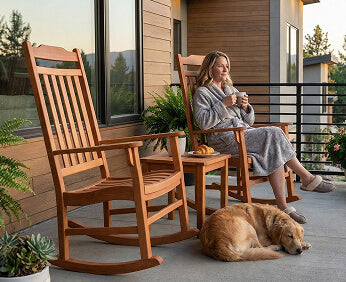
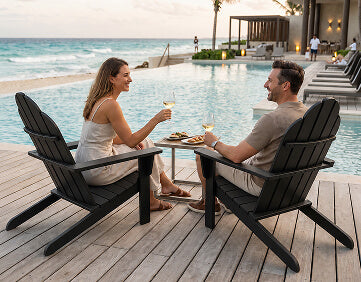
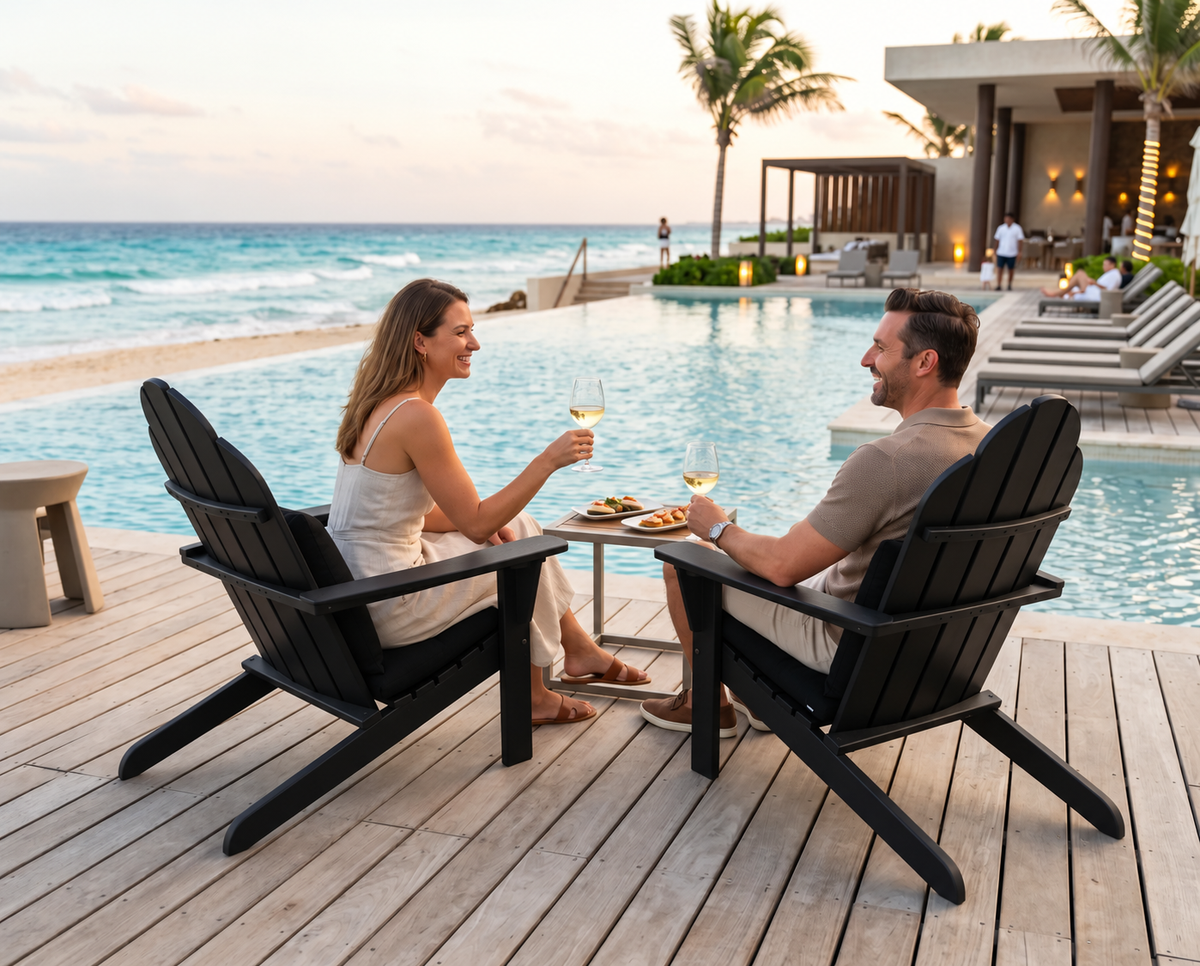
A true Adirondack chair sits low to the ground with the seat angled back, has a slanted slatted back and wide flat armrests built for a drink or a book. That silhouette is why the chair works so well on a porch, a dock, or a fire pit ring.
Everything past that shape, the wood, the joinery, the finish, is what decides whether the chair you buy is still on your patio in twenty years or replaced in three.

Comparing Adirondack Chair Materials
Solid hardwood — teak and Robinia. Hardwood is the traditional Adirondack material and still the one with the longest track record outdoors. Teak outdoor furniture has been the benchmark for a century, and pieces like Kingsley Bate's Adirondack chair and Barlow Tyrie's Adirondack armchair carry that reputation. Teak does need occasional oiling to hold its color and will silver over time if you leave it in the elements.
Robinia is teak's quieter rival, and it's what we build our own line from. It's a temperate hardwood, not tropical, and it's Class 1 rated for rot, decay, and insect resistance without any chemical treatment. Our World's Finest Adirondack is built from 100% FSC-certified Robinia with mortise and tenon joinery and hidden hardware, and it's built to last even in damp climates.
Recycled poly lumber (HDPE). Brands like Trex and Polywood make Adirondack chairs from recycled high-density plastic, shaped and grained to resemble wood. Trex's Yacht Club Adirondack and Polywood's Modern Adirondack are two examples we love. Poly lumber won't rot, splinter or need refinishing, and it comes in far more colors than wood does but it's lighter and less substantial than hardwood.
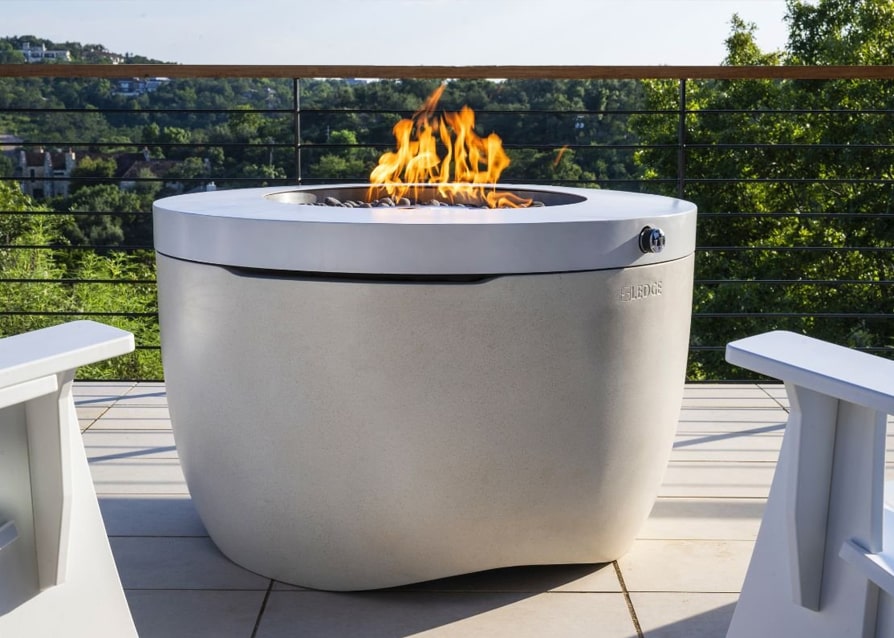
Resin. LEDGE's Mainstay Adirondack line is molded resin which is built heavier and more commercial-grade than most poly options, and it's often sold as part of a set with a matching fire pit. Resin sits between poly and hardwood on both weight and price.

Choosing an Adirondack Style You'll Love
Within any of those materials, the style variations mostly come down to how the back is shaped and whether the chair folds. A classic slat-back keeps the traditional straight profile. A curveback, like the contoured seat and back on our own Robinia chair, adds a gentler recline that a lot of people find more comfortable for long stretches. A shellback rounds the top slats into a fan shape for a softer look. Folding versions, common in poly lumber, trade a bit of rigidity for the ability to stack the chairs away when the season turns.
What Makes a Chair Last
Two Adirondack chairs can look nearly identical in a photo and age completely differently, and the reason almost always comes down to four things:
Joinery. Mortise and tenon joints, where one piece of wood is shaped to interlock with another, hold far longer than screws or staples driven straight through the slats. It's slower to build and it's why a well-joined chair costs more, but it's also why it doesn't loosen and wobble after a couple of summers.
Hardware. Hidden or stainless hardware resists rust, where exposed carbon-steel screws streak and corrode within a season or two of rain.
Wood density. This only applies to hardwood, but it matters. Robinia's Janka hardness rivals teak's, which is why both hold up to weather and weight so much better than a soft, unspecified wood you'll see on cheaper chairs.
Finish. A natural oil finish that penetrates the wood ages gracefully and needs almost no upkeep. A painted or coated finish looks sharp on day one but chips and needs redoing, especially anywhere the chair gets handled, like the armrests.
A well-built hardwood Adirondack chair should feel substantial when you pick it up. If it's light enough to skid across the deck in a stiff wind, that's usually a sign of thinner material and less joinery holding it together.

Caring for Your Adirondack Chair Through Every Season
Care depends entirely on what the chair's made of. Poly lumber and resin need little more than a hose-down. Teak asks for occasional oiling if you want to keep its honey color, or none at all if you're fine letting it silver naturally. Robinia sits in between: it's happy left alone outdoors year-round, though a light clean before a season of heavy use never hurts. We carry an extensive Golden Care line that will help you care for your outdoor furniture and keep it looking new for years to come.
Frequently Asked Questions
What's the best material for an Adirondack chair that stays outside all year?
For year-round exposure without much maintenance, Robinia and resin both hold up well. Teak is a close third if you're willing to oil it occasionally; poly lumber is the lowest-maintenance option but the least substantial sit of the four.
Do Adirondack chairs need to be covered in winter?
Not if they're solid hardwood, poly lumber or resin. A cover mostly helps keep cushions and hardware cleaner, not the chair itself.
Why do some Adirondack chairs turn grey and others don't?
That's teak's natural weathering process, called silvering, and it happens when the wood's natural oils are exposed to sun and rain over time. It's not damage, just teak's default look if you skip the oiling. Robinia and treated poly lumber don't grey the same way.
What's the difference between a curveback and a classic Adirondack chair?
A classic Adirondack keeps the original straight-slat back at a fixed recline. A curveback contours the seat and back to the body for a deeper, more supportive lean, which is the shape we use on our own Robinia chair.
How long should a well-made Adirondack chair actually last?
This is the question we get asked most, and the honest answer is: it depends almost entirely on the joinery and the wood, not the price tag alone. A chair with mortise and tenon construction in Robinia or teak is realistically a 20-to-50-year piece. A stapled softwood chair from a big-box store is often a one-or-two-season chair no matter how it looks on the shelf.
An Adirondack chair is one of the simplest pieces of furniture you can buy, and one of the easiest to get wrong. Get the material and the joinery right, and it's the kind of chair that's still holding up a glass of something cold for your friends and family a decade from now. Explore our full range of Adirondack chairs to find the one built to stay.
Explore More