Luxury Outdoor Table Setting Ideas for the Perfect Gathering
Luxury Outdoor Table Setting Ideas
There's a moment just before the guests arrive when everything's set and the space is quiet. It's when an outdoor dinner becomes a kind of art.
A beautifully set outdoor table is one of the most generous things you can give your friends and family. It shows you thought about the evening before anyone arrived.
At Frontera, we've spent over three decades furnishing fine homes and 5-star resorts with the and the small considered pieces that turn a backyard into a setting. What follows is a guide to setting an outdoor table that feels like somewhere you'd want to spend a long, slow evening — for any season, any guest list and any reason to gather.

Start with the Table Itself
The most beautiful table setting in the world cannot rescue a table that fights it. Before you think about linens or florals or candles, think about what you are setting onto.
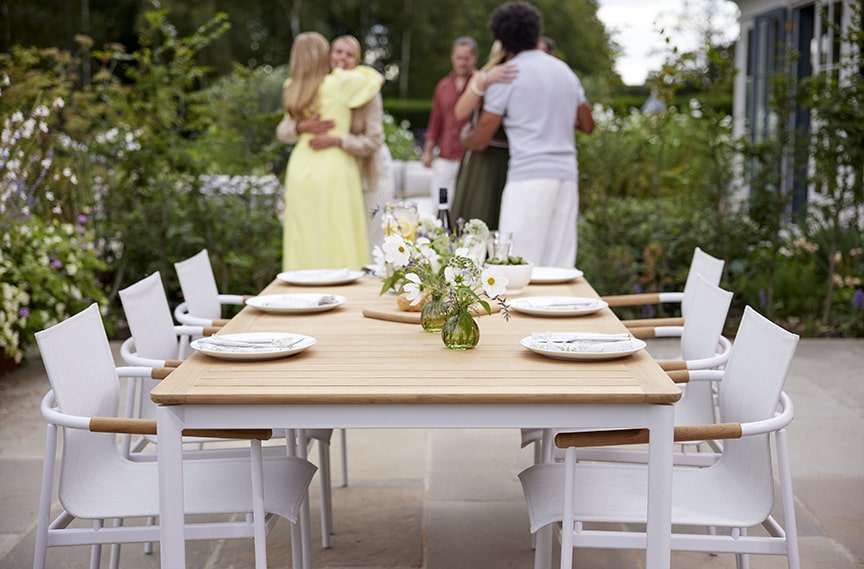
A resort-quality outdoor dining experience begins with a sized for the gathering you actually host most often. For couples and small groups, a round table for four to six builds intimacy and keeps everyone in the same conversation. For families and frequent entertainers, a long rectangular table for eight to ten allows the kind of layered, multi-conversation dinner that the best outdoor evenings become.
Material matters more than most buyers realize. Teak is the resort standard for a reason — it weathers to a quiet silver patina over years, it resists rain and humidity without complaint, and the grain itself is beautiful enough that you can leave it bare under a candle. Stone and cast aluminum offer different aesthetics, more contemporary and architectural, and pair beautifully with linen and ceramic.
Whatever you choose, choose you would actually want to sit in for three hours. The single most common regret in outdoor dining is buying chairs that look right in the photograph but cannot hold a guest comfortably through dessert.

Layer the Surface
A great outdoor table setting is built in layers. Each layer adds texture, depth, and the sense that someone considered the entire evening before the first guest arrived.
Start with a runner or a tablecloth in natural linen: white, oatmeal, soft sand, or a quiet sage green. Skip patterns for the base layer. Outdoor tables already have a great deal going on visually; the wood grain, the surrounding plants, the sky overhead and a simple ground layer gives everything that follows a place to land.
Add chargers as the second layer. They do not have to be expensive: woven rattan chargers, brass or matte black, even simple stone, but they should be there. Chargers are the small detail that takes a table setting from "set" to "set with intention."
Top with plates that suit the food. White ironstone for anything; hand-thrown ceramic in muted tones for casual evenings; matte black or deep colors for fall and winter dinners. Mixing plate styles between courses is a touch the best hosts use without making it look studied.
Layer in cloth napkins, never paper for a dinner, folded simply and held with a sprig of rosemary, a ribbon, or a small tied bundle of dried lavender. The napkin is one of the few elements every guest will actually touch, and the texture registers immediately.
Glassware That Belongs Outdoors
Outdoor glassware should be substantial enough that a breeze will not knock it over and beautiful enough that you would not mind a guest noticing it. Hand-blown stemware, weighted-bottom tumblers, even good acrylic for the most casual occasions — the goal is glass that feels intentional in the hand and looks good in the late light.
Plan for at least two glasses per setting: water and wine, or water and a cocktail. For longer dinners, three is not excessive. Give each glass enough room that no one is reaching across someone else's plate.
A single small carafe of water set at intervals along the table is more elegant, and easier on the host, than a pitcher being passed every five minutes.

The Centerpiece: Low, Loose and Local
Three rules govern an outdoor centerpiece, and they apply across nearly every season.
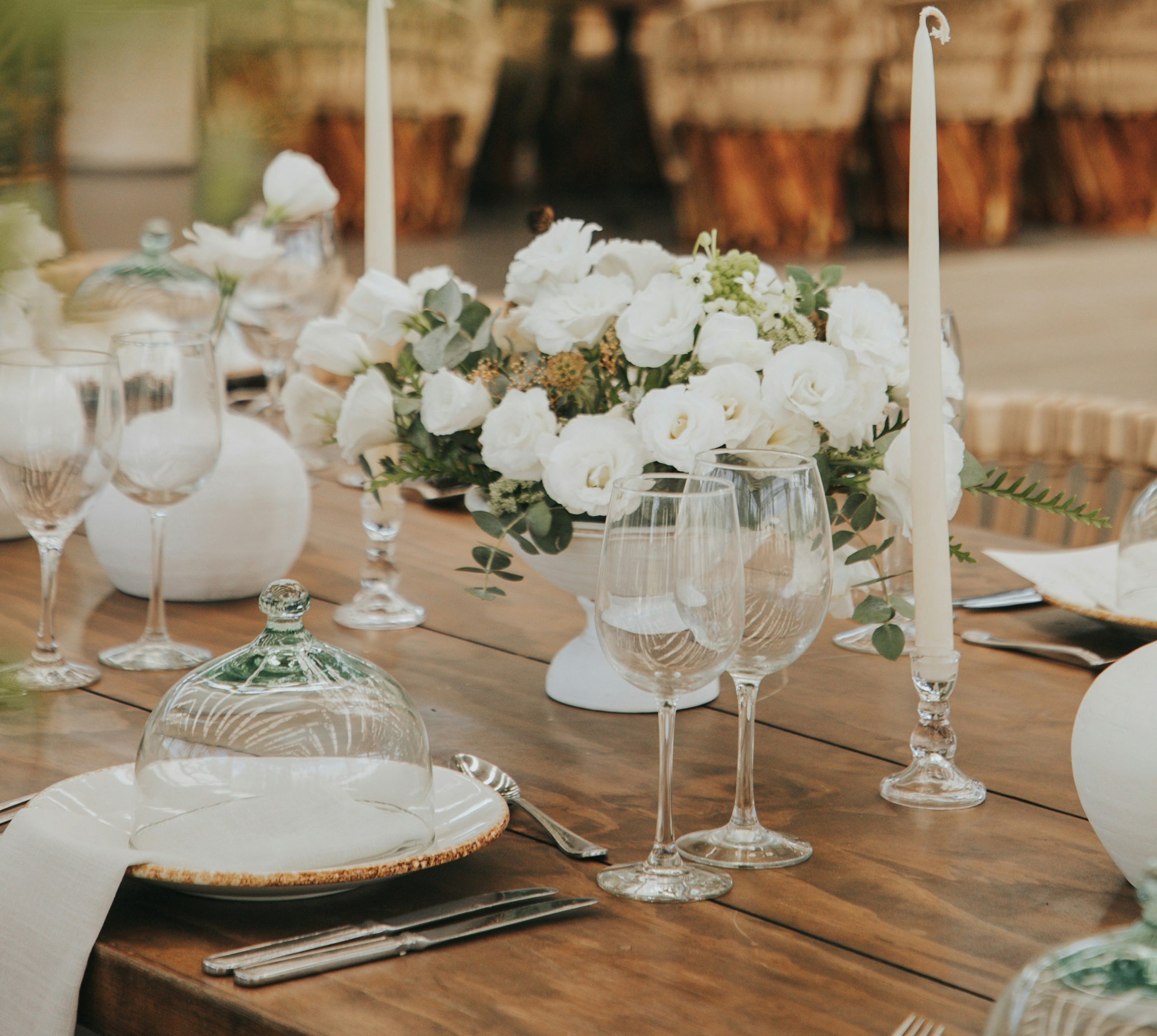
It should be low. Anything taller than the bridge of a seated guest's nose interrupts conversation. Choose flowers, fruit, herbs, candles — all kept under twelve inches tall. Guests should be able to see each other across the table without leaning.
It should be loose. A tightly arranged florist's bouquet looks formal in a way that fights an outdoor setting. Look at how a meadow grows: asymmetrical, with stems leaning, with movement in the negative space, and aim for that. Cut from your own garden if you can. Local, seasonal, and slightly imperfect is the resort standard.
It should be repeated, not centered. A single arrangement in the middle of a long table looks like a wedding head table. Instead, place three or five smaller vessels at intervals along the length — small bud vases, votives, footed bowls of fruit — to spread the visual interest and the conversation evenly down the table.
Light: Where the Evening Comes Alive
If a great outdoor table is a setting, then is what turns the setting into a scene.
Candles are the single most important light at an outdoor table. Cluster them — tapers in weighted holders, votives in storm glass, hurricane lanterns down the length of the table — and you will not need much else. The flicker is what your eye reads as romantic; nothing else replicates it.
For the ambient layer, string lights overhead frame the dining area and pull the eye up. Lanterns at the perimeter give the space edges. Soft uplighting on the surrounding plants does the work most people do not realize is happening — it makes the table feel held by the rest of the garden.
For tables set beneath umbrellas, discreet tucked into the canopy ribs cast a warm downward glow across the entire setting. It is one of the most underused tools in outdoor entertaining.

The Shade Above
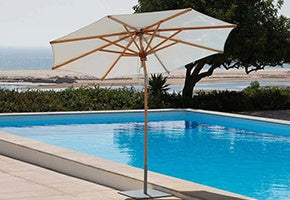
For lunches, brunches, and dinners that begin in daylight, a well-chosen is the architectural element that frames the entire table. Size it generously — at least two feet beyond the table on every side — so that everyone seated is in genuine shade. A rectangular canopy belongs over a rectangular table. A round market umbrella belongs over a round or square one.
The umbrella is also a color and texture decision. A natural canvas or soft taupe canopy reads as classic; a deeper navy or hunter green reads as architectural; a warm terracotta reads as Mediterranean. The umbrella is a piece of soft architecture overhead — choose it the way you would choose a curtain in a beautifully designed room.
The Tables Around the Table
A great outdoor dinner is rarely just one table. The supporting surfaces are part of the setting and part of the choreography of the evening.
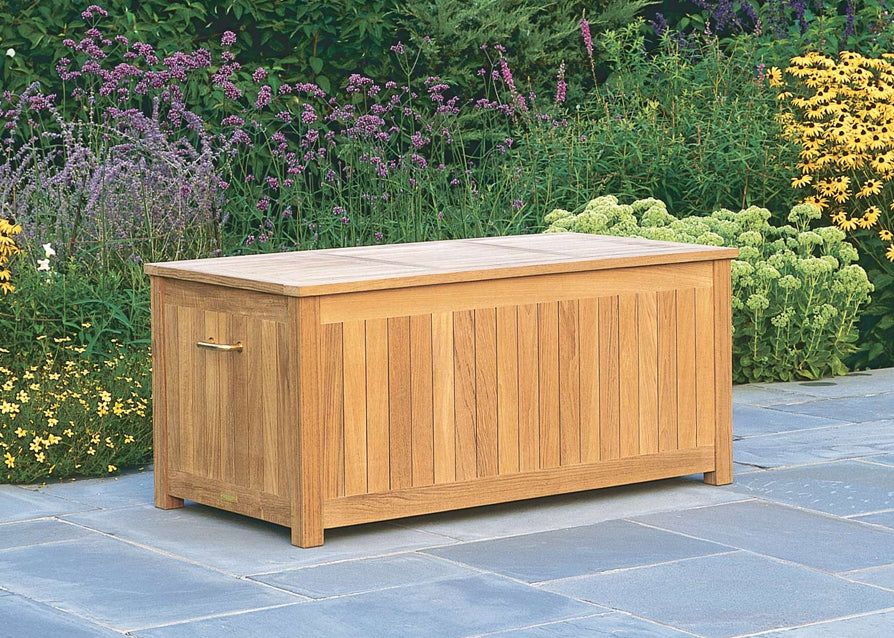
A somewhere within easy reach gives guests a designated place to pour their own drinks, mix something casual, or set down a wine glass between courses. It also gives the host a station — a place to plate appetizers, to keep the corkscrew, to handle small details without leaving the table.
A small near the host's seat is a quiet luxury — a place for the bread basket, the spare carafe, the small things that should not crowd the dining surface.
If your evening will run long, consider a separate near a lounge area for post-dinner drinks and dessert. The shift from dining table to lounge is one of the most elegant transitions in outdoor entertaining — it signals to guests that the evening is moving from formal to leisurely, and it gives the host a chance to clear the dinner table without anyone feeling rushed.

Season by Season
A great outdoor table changes with the calendar — not radically, but enough that each gathering feels of the moment.
For summer, lean into white linen, clear glass, cut garden flowers in loose arrangements, and citrus tucked among the candles. Keep everything light, cool to the eye, and slightly improvised.
For fall, deepen the palette. Linen in warm sand or charcoal, brass or copper accents, votives among small pumpkins or pomegranates, foliage in olive and burgundy. Heavier glassware. A throw draped over each chair, in case the air turns.
For spring, return to lightness — but with a touch of color the summer table does not need. Tulips, ranunculus, soft pinks and pale yellows, the first sprigs of mint and chive cut from the garden. A pale linen runner instead of white.
The principle across all three is the same. Look outside before you set the table. The season is doing half the work for you. Your job is not to compete with it but to bring it onto the table.
The Final Hour
The hour before guests arrive is when the table comes alive. Light the candles fifteen minutes early so that the wax has begun to pool by the time anyone sits down.
Pour the first glass of wine for yourself. Put on the music a few minutes before you actually need it. Walk the perimeter of the table once, slowly, and adjust the small things — a leaning candle, a chair pulled an inch too far back, a napkin slightly askew.
By the time the first guest is at the door, the table will already feel like a place people want to be.

Bring the Resort Home
A beautifully set outdoor table is one of the most generous ways to invite the people in your life to slow down. It does not require a large budget. It requires attention, a few good pieces, and the willingness to set the stage before the curtain rises.
Frontera has spent over three decades curating the that make these evenings possible — from the teak dining tables that have anchored fine homes for a generation to the small considered details that turn a backyard dinner into a memory.
Explore our collections. Bring the resort home.
Explore More