Around the Fire: Designing an Outdoor Space That Comes Alive
The best outdoor gatherings always seem to happen around a fire.
But the fire itself isn't the whole story.
At Frontera, we've spent over three decades curating the that turns a well-warmed evening into one nobody wants to leave. What follows is a guide to designing an outdoor space around the fire; the seating, the layout and the small details that make it unforgettable.
The Seating Matters
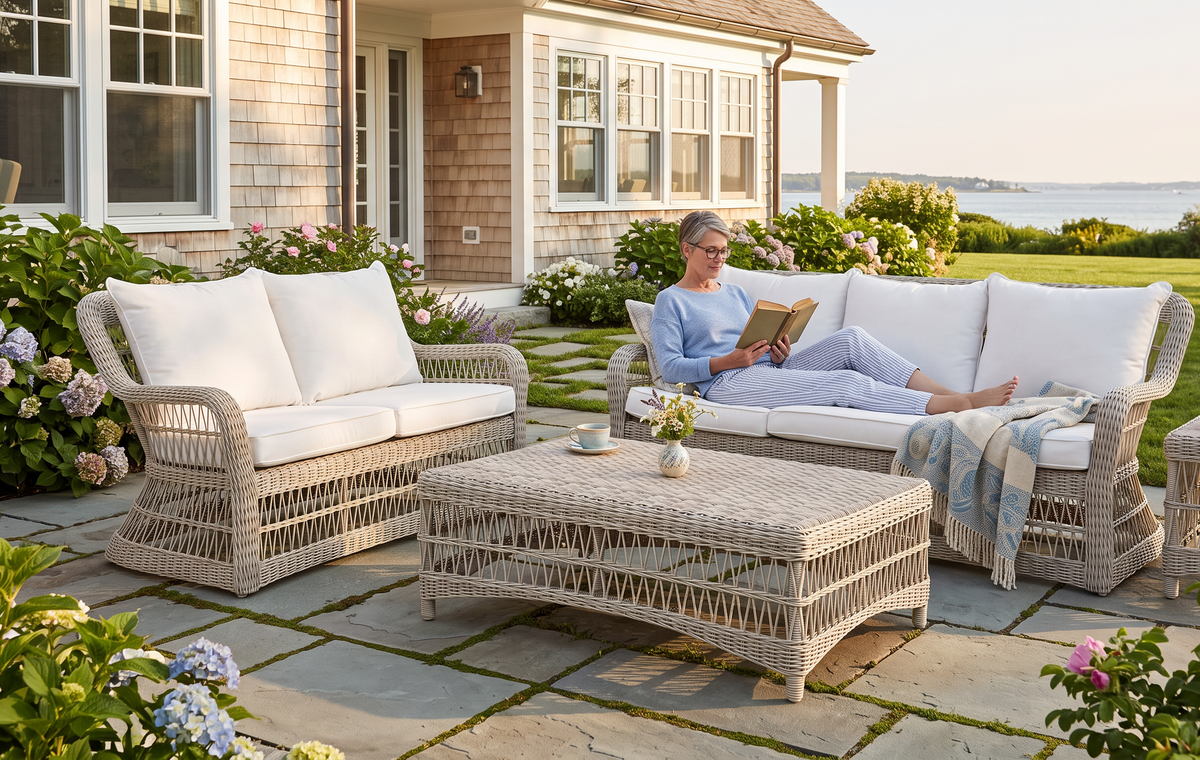
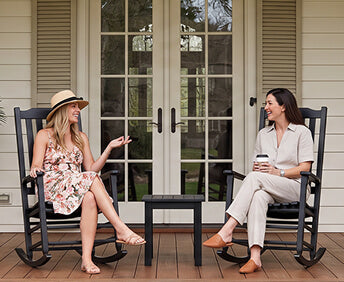
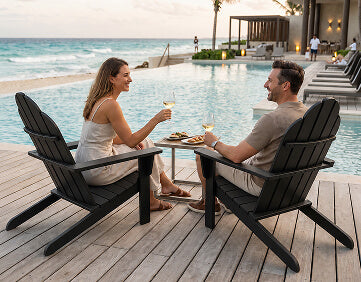
A fire is beautiful. It draws the eye and warms the air. But it's the seating that invites people to nestle in. A deep, well-made or a pair of pulled up to the fire is what turns the evening into one that lingers.
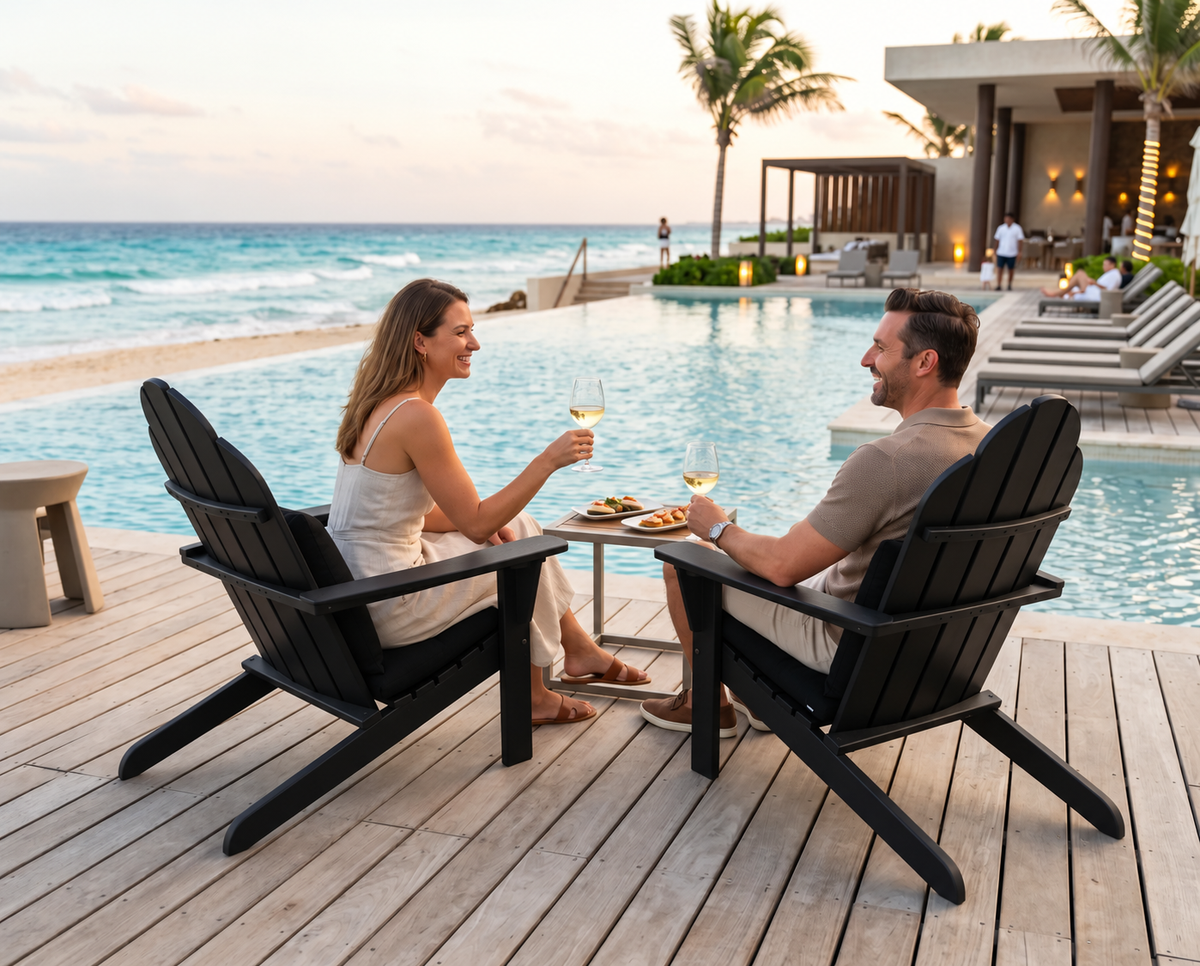
You've seen it at the great resorts. The Greenbrier's fireside verandas. The Broadmoor's outdoor lounges. The Grand Hotel. What makes those spaces memorable isn't just the fire but the memories that are made and the spaces that make them possible.

The Seating: The Real Investment
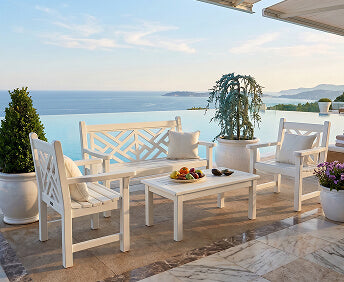
A fire feature is only as good as the seating around it, which is why the sectional, the club chairs and the daybed are where most of your outdoor budget should go.
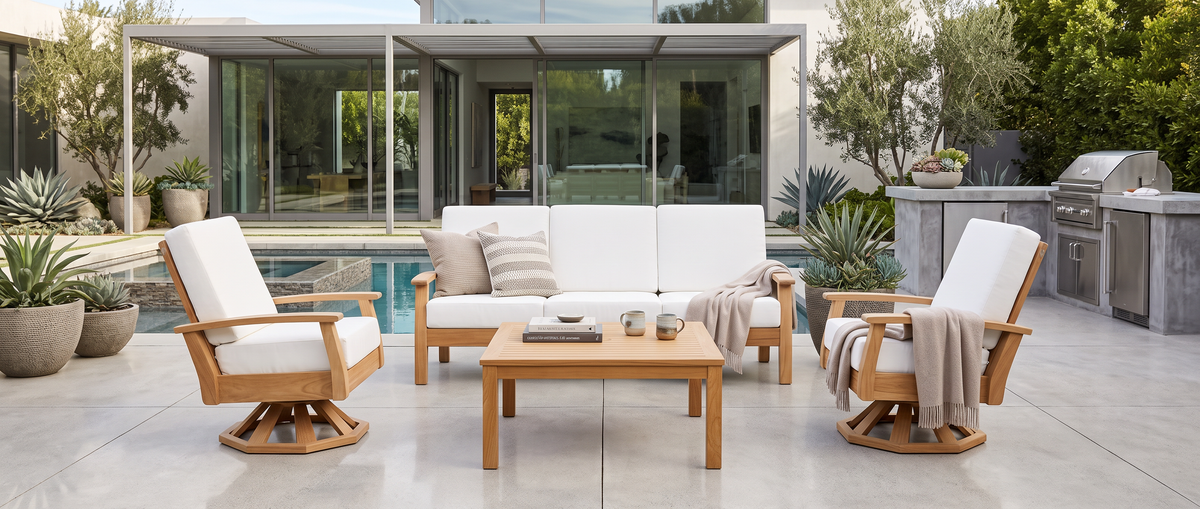
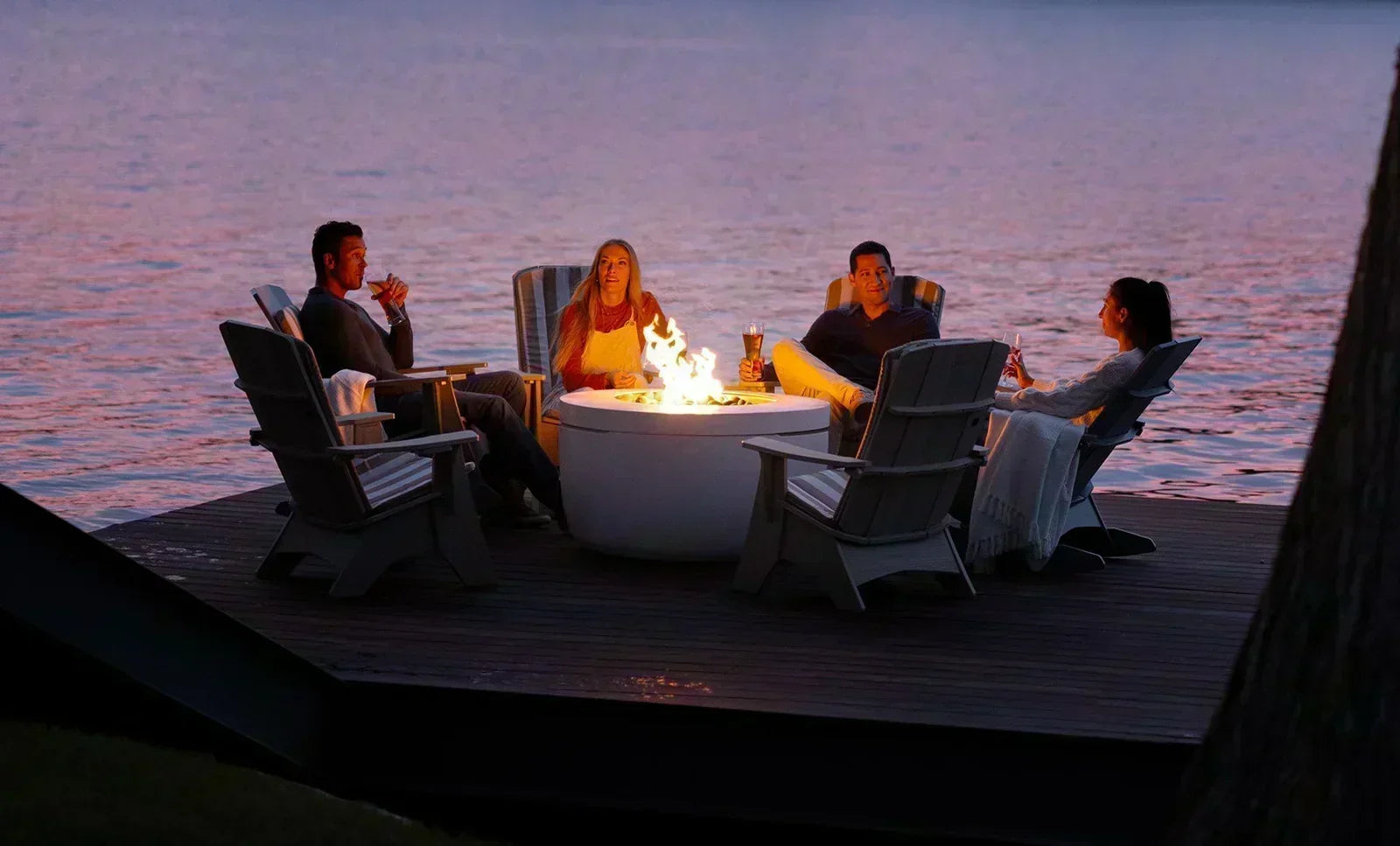
Position outdoor sectionals or lounge chairs three to four feet from the flame. Close enough for warmth, far enough for safety and comfort. Angle them slightly inward toward the fire, not squared off. Fire pits work best with a circular or curved arrangement, so everyone can see each other.
Choose seating deep enough to sit in for hours, with cushions built to hold their shape through years of long evenings. For a fire pit table, treat the surrounding seating like a small dining area.
Not Just for Night
A well-designed fire feature isn't only for evenings. On a cool spring morning, the same fire pit warms a coffee-and-newspaper hour on the patio. In fall, it turns a Saturday breakfast outdoors into something you'd otherwise reserve for a mountain cabin. And in the shoulder seasons, it stretches every part of the day.
The best outdoor spaces get used in the morning too. A blanket, a coffee, the fire crackling beside you before the day begins. Those hours are worth designing for.
The Seating Around the Fire
A fire feature is only as good as the seating around it. This is where many outdoor rooms fall short.
Position at a distance from the fire that lets guests feel the warmth without needing to lean away. Three to four feet from the edge of the flame is the sweet spot for most fire pits — close enough for warmth, far enough for safety, close enough for conversation, far enough for comfort.
Angle the seating slightly inward toward the fire, not squared off. Fire pits work best with a circular or slightly curved seating arrangement — the same principle that made theater-in-the-round work for centuries. Everyone can see the flame, everyone can see everyone else, and no one is looking at the back of another guest's head.
For a fire pit table, treat the surrounding seating like a small dining area. A pair of or a small cluster of club chairs pulled close, with drinks on the fire table itself.

Fire Pit or Fire Pit Table
The first design decision is what kind of fire feature suits your space.
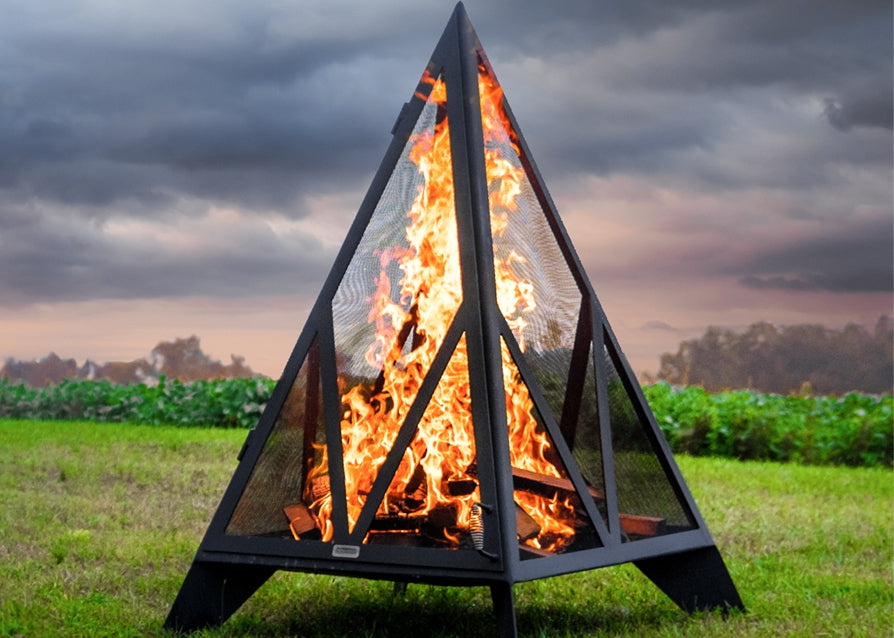
A traditional fire pit — the classic round or square vessel filled with wood or gas flame — is the more social choice. It invites seating on all four sides. It becomes a gathering point that the entire room orbits. It reads as more casual, more elemental, more like a campfire in the best sense.
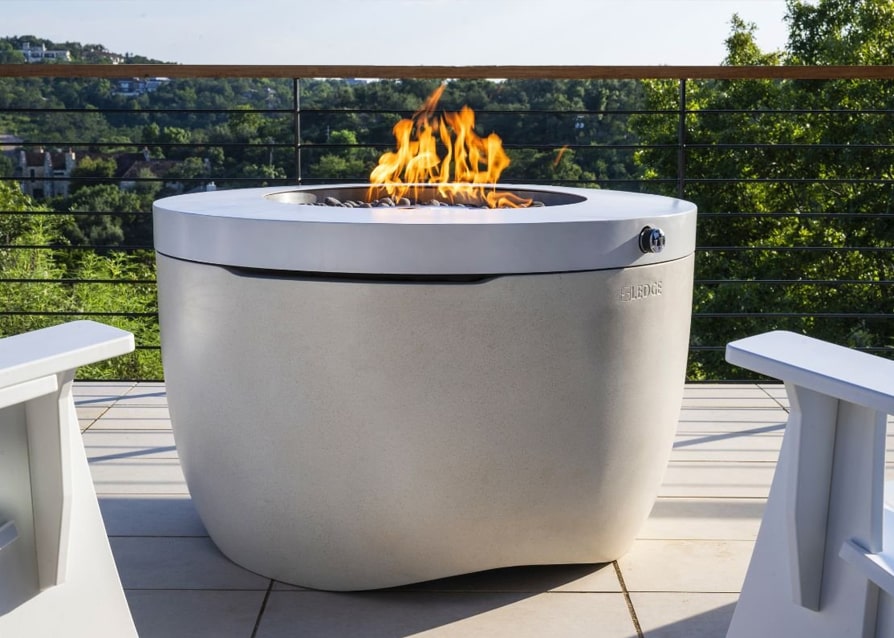
A is the more architectural choice. The flame runs down the center of a table, with the surface around it usable for drinks, small plates, and the occasional coffee cup. It reads as more designed and more integrated with the outdoor room, and it functions as a dining or lounge table when the flame is off.
For most backyards, the fire pit is the right anchor for lounge seating; the fire pit table is right for dining or conversation seating. Some outdoor rooms include both — a fire pit near the sectional for the after-dinner shift, a fire pit table near the dining set for the meal itself.
For a fire feature that anchors the space without the cost of a custom install, browse our . Pieces sized for a family gathering and priced within reach.

Gas, Wood, or Electric
The fuel choice is less about aesthetics than about how you actually intend to use the fire.
Wood fires are unmatched for atmosphere. The sound of the crackle, the smell of the smoke, the tactile ritual of building the fire — none of it can be replicated. They are also more work. You need dry wood, a place to store it, patience to build the fire, and time to let it die down at the end of the night.
Gas fires — propane or natural gas — turn on with a knob, produce clean heat, and let you end the evening with the flip of a switch. For homeowners who want the effect without the ritual, they are the practical answer. Modern gas fire features are engineered with realistic flame patterns and lava rocks or ceramic logs that read convincingly from any reasonable distance.
Electric fires are the most recent addition to the category and belong in specific settings — covered patios, screened porches, spaces where open flame is impractical. They warm the immediate area, glow beautifully, and require nothing more than a plug.
The Second Layer: Overhead Heat
For evenings that push into fall — or for climates where "shoulder season" is most of the year — a fire alone is not always enough. Overhead heat is the piece that extends the outdoor room by months.
come in three broad categories. Freestanding pyramid or mushroom-style heaters warm a defined seating area from a single point. Wall-mounted or pendant heaters — a category dominated by makers like — are the resort standard. They warm the whole area from above without occupying floor space, and they read as architectural rather than as equipment.
For covered patios and screened porches, offer a clean, immediate warmth without the fuel logistics of gas. They mount discreetly under an overhang and turn on with a switch.
The combination of a fire pit for atmosphere and overhead heaters for pure warmth is what allows a well-designed outdoor room to work from April through November in most of the country — and year-round in the southern half of it.
The Lighting That Frames the Fire
Fire is the light. But not all of the light.
A well-designed fire area is lit at three levels. The fire itself provides the warm, low, flickering glow that defines the space. Layered at the perimeter — lanterns on side tables, low landscape lighting along the pathways, string lights overhead if the ceiling allows — provides the ambient light that lets guests see each other and find their way to the wine.
The rule is that no single light should compete with the fire. The lighting should be soft enough that the flame reads as the brightest point in the room. This is what gives an outdoor fire area its emotional character. It is why staring at a bonfire is more relaxing than staring at a candle — the flame is dominant.
The Small Details
A few small details separate a great fire area from a good one.
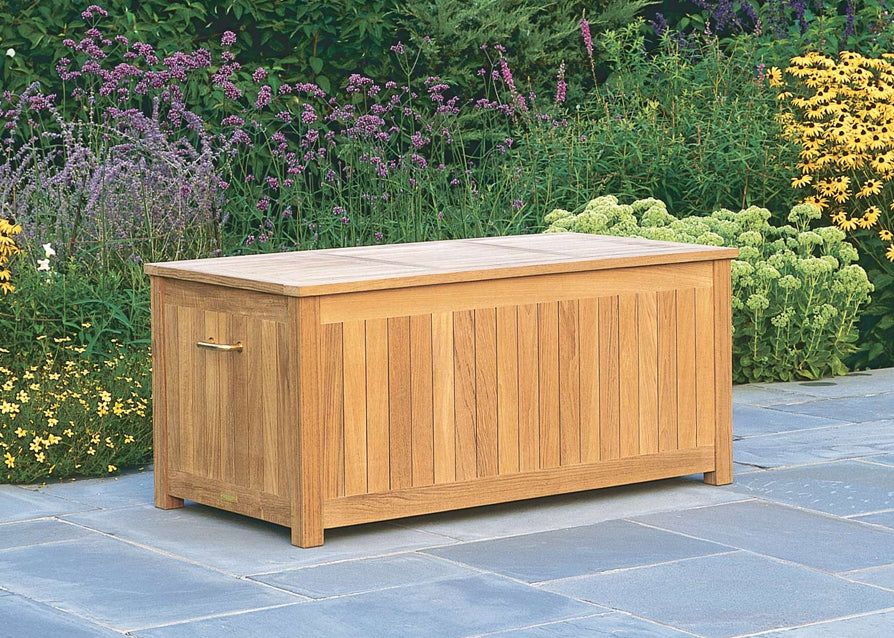
Have a stack of soft throws within reach. Even in warm evenings, a fire will draw guests who want to be closer to the warmth, and a throw over the shoulders extends their stay by an hour. Store the throws in a covered basket nearby, or in a that doubles as extra seating.
Position a small near every seat. Guests around a fire need somewhere for a wine glass, a coffee cup, or a small plate of dessert. Without side tables, guests balance drinks precariously on their laps or stand up to set them down.
Keep the fire area tidy. A basket for firewood. A small hook or dish for the fire tools. A designated place for the lighter and the matches. The unkempt fire area is a distraction; the tidy one is a room.
Care Between Gatherings
A well-built fire feature will last for years with modest care. Sweep out the ash after wood fires. Cover gas features between weekends. Bring cushions inside or protect them with before predicted rain. Store the throws and the small accessories in a dry place when the season ends.
The fire feature that is cared for will look like itself in year ten. The one that is not will not.

Bring the Resort Home
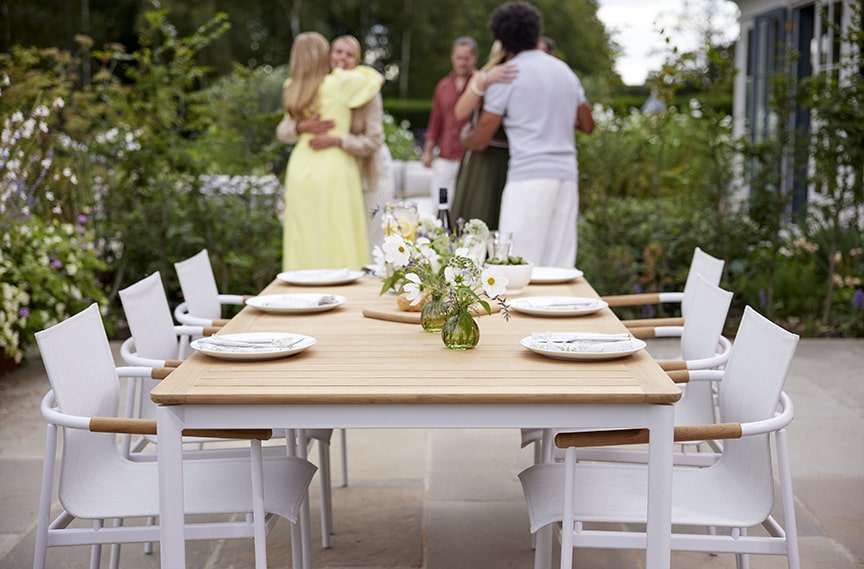
An outdoor space designed around the fire is a space designed for the longest, best evenings — the ones that stretch past midnight, the ones that turn dinners into memories, the ones that make your backyard the place your guests keep asking to come back to.
Frontera has spent over three decades curating the fire pits, the heaters, the outdoor lounge seating, and the small considered pieces that make these evenings possible. From the fire pit that becomes the center of the summer to the overhead heaters that extend the season into November, our are made for the nights that turn ordinary weekends into ordinary luxury.
Explore our collections. Bring the resort home.
Explore More