

Outdoor Lounge Chairs: How to Pick a Pair That'll Last
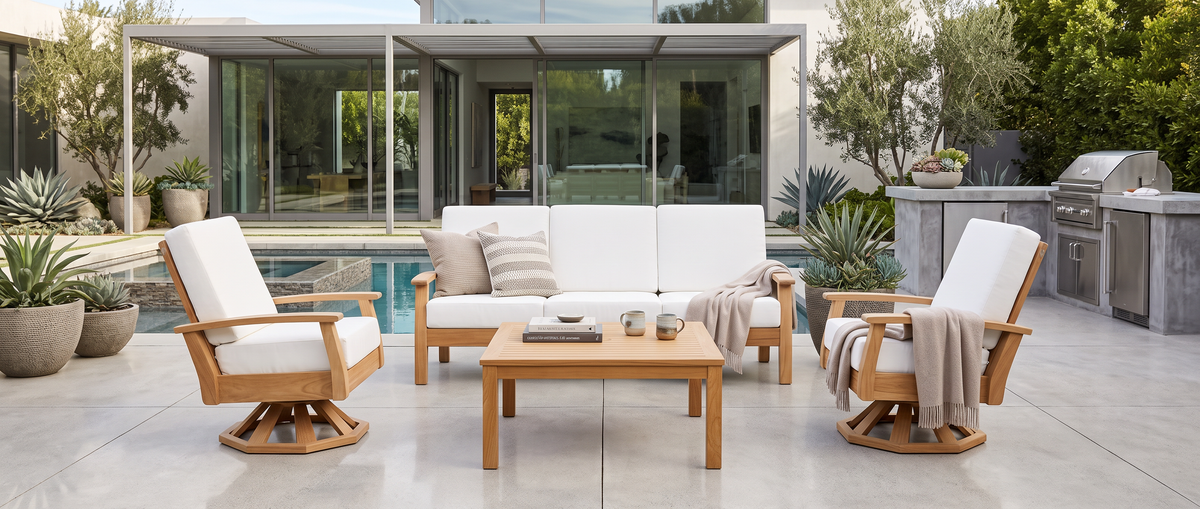
TL;DR: Most outdoor lounge chairs don't make it past a few summers, and it's almost never the design that fails first. From bad joinery, soft wood, and hardware that rusts from the inside out. This guide covers what actually holds up outside, how two chairs become a pair instead of just two chairs, and what to check before you buy.
There is no piece of outdoor furniture that fails quite as quietly as a lounge chair.
A dining table warps and you see it immediately. A cushion fades and you replace it in an afternoon. A lounge chair, though, goes wrong from the inside — a joint loosening a millimeter at a time, a screw rusting somewhere you'll never look, until one ordinary Tuesday it just gives.
The cushions looked great in the showroom. The frame felt solid for the thirty seconds you sat in it. None of that tells you what two summers of sun and rain will do.
A pair is a bigger bet than one chair. Two frames, two cushion sets, a spot on the patio they'll probably hold for years.
Worth getting the bones right before you fall for a color.
Where the Corners Get Cut
Fabric fades. Everyone knows that going in, and new cushions fix it by afternoon.
The real failures happen underneath. Where nobody thinks to look.
Start with the joints. Cheaper frames are often held together with screws driven straight into end grain — sometimes just glue and staples. Give that a season of sun and rain working the wood apart, and it loosens.
Mortise-and-tenon joinery doesn't give up like that. The pieces lock into each other, not just fasten to each other. That's the difference between a chair that holds for a season and one that holds for a generation.
Wood matters more than people expect. Softwood takes a stain fine, photographs well in a catalog. But it doesn't have the density to resist rot or insects on its own, so it leans on a chemical treatment. That treatment wears off years before the chair does.
Teak has been the resort standard for a reason — dense, naturally weather-resistant, no chemical help required. Robinia, sometimes called black locust, rivals it in hardness at roughly 1,700 on the Janka scale, resists rot and insects on its own, and holds up 50 years or more even in damp climates. Neither one asks a chemical treatment to do the job the wood should be doing itself.
Then there's hardware, and nobody checks it until it's too late. Regular steel rusts from the inside. You don't see it until the stain is already bleeding through the finish.

Where Two Chairs Become a Pair
One chair just has to be comfortable and fit the space.
Two chairs answer a harder question — do they read as a set, or do they just happen to be sitting near each other.
Placed with a little thought, two identical chairs look considered. Shoved together with no gap, they look like they came off the same truck and haven't been unpacked yet. The distance between those two outcomes is about three feet of planning. Not money.
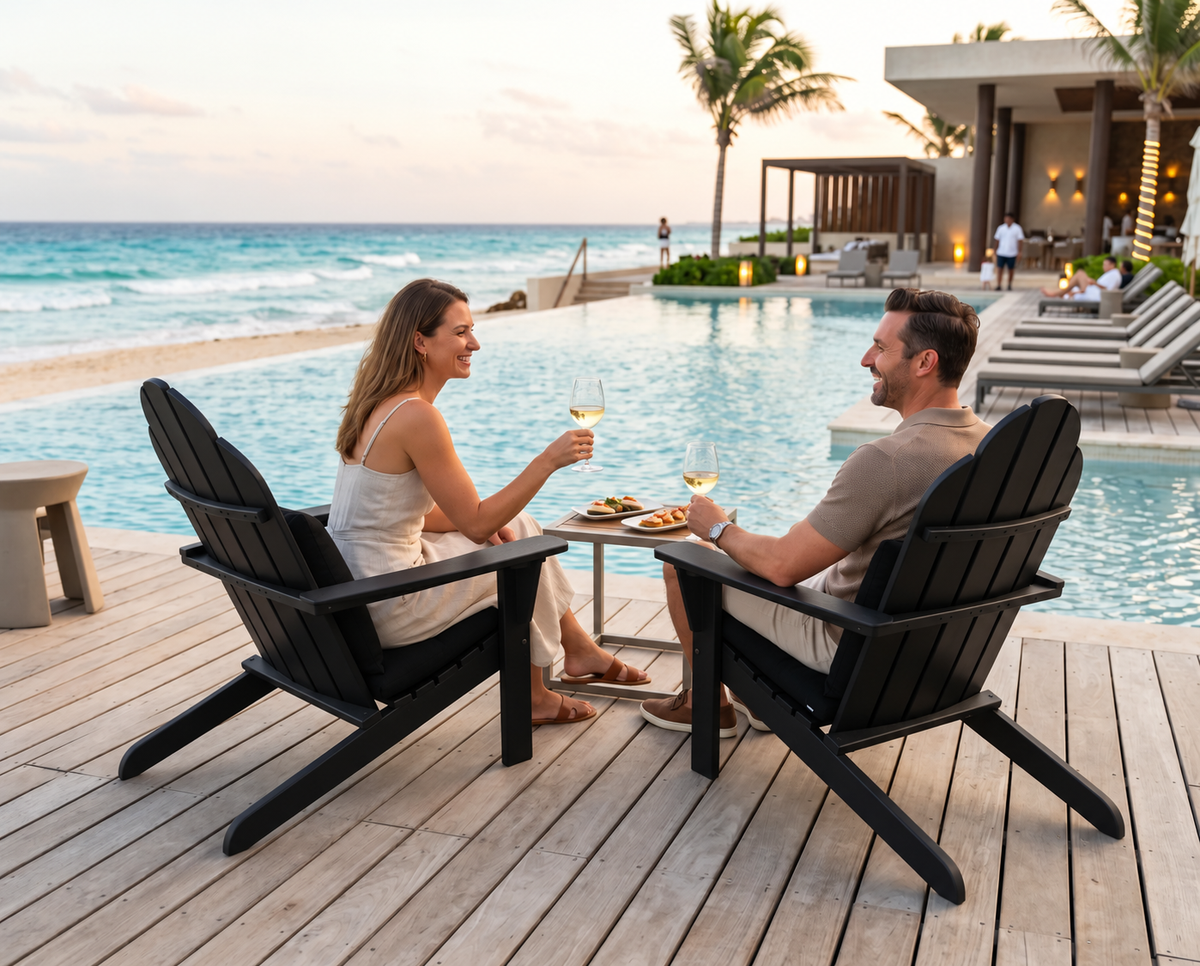
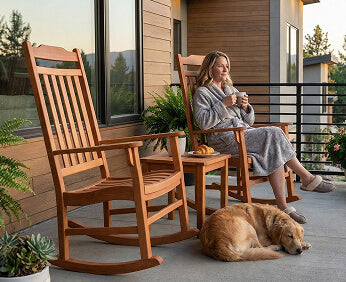
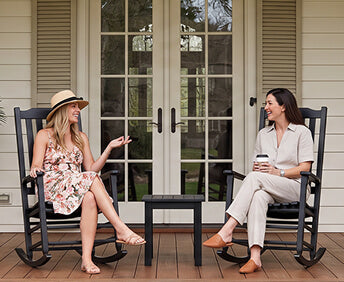
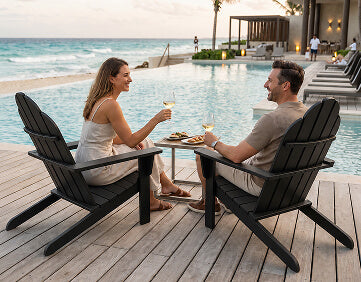
Leave room for a side table between them. Angle them in slightly, toward each other, instead of lining them up dead straight like a waiting room. Two chairs facing the same direction read as furniture. Angled toward each other, they read as a conversation about to happen.
The rule for a pair is the opposite of the rule for a solo piece — position it for two, not for one, and let the space between the chairs do as much work as the chairs themselves.

Designing the Space
Cushions do more work than people give them credit for. The right weight and color turn "we bought these" into "we chose these." They're also the cheapest thing to swap out later.
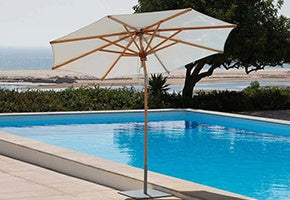
Shade decides whether the chairs get used at all. Full afternoon sun, nothing overhead — people sit for ten minutes and give up. A patio umbrella blocking the worst of it, and the same two chairs become where the evening happens instead.
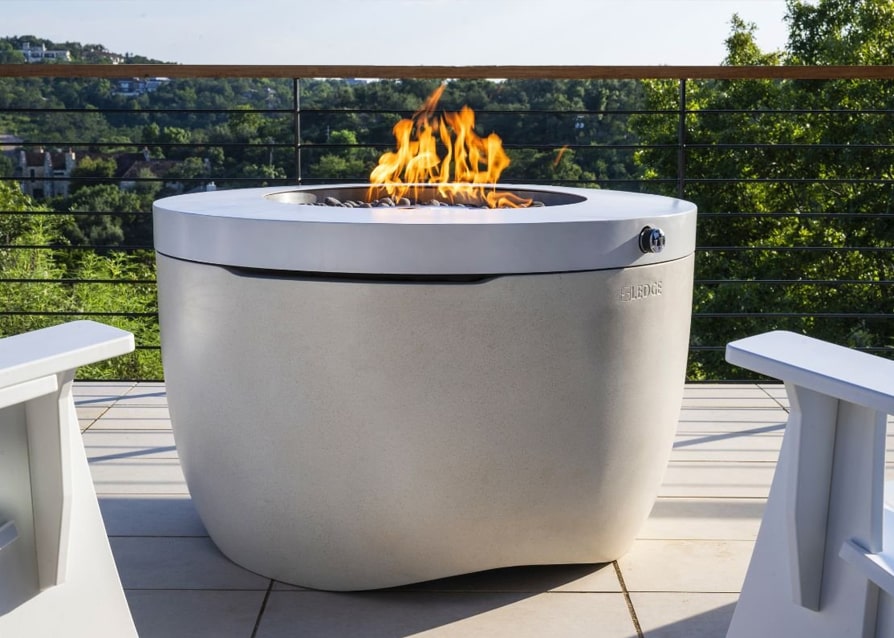
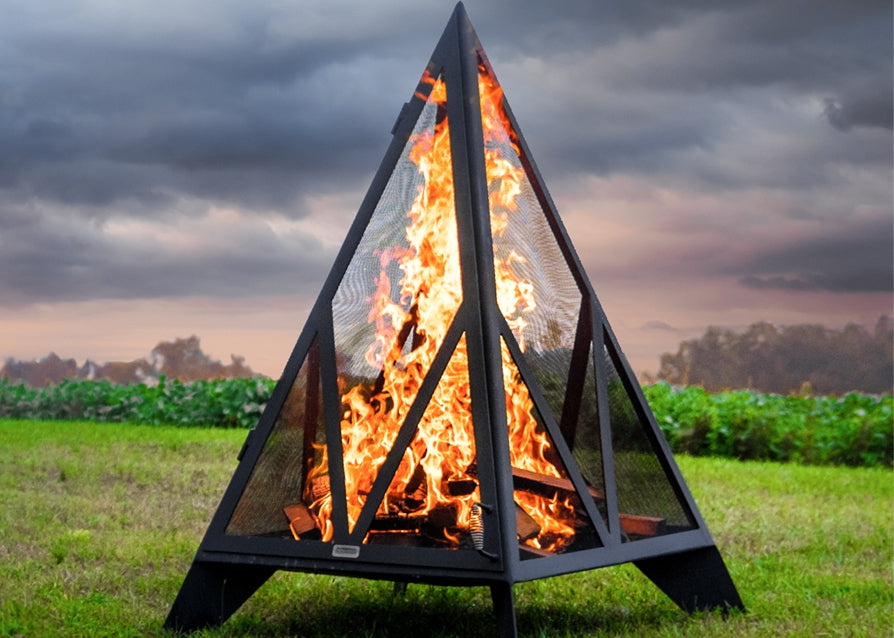
If the patio gets used after dark, a fire feature somewhere in view stretches a three-hour afternoon spot into one that holds people until ten.
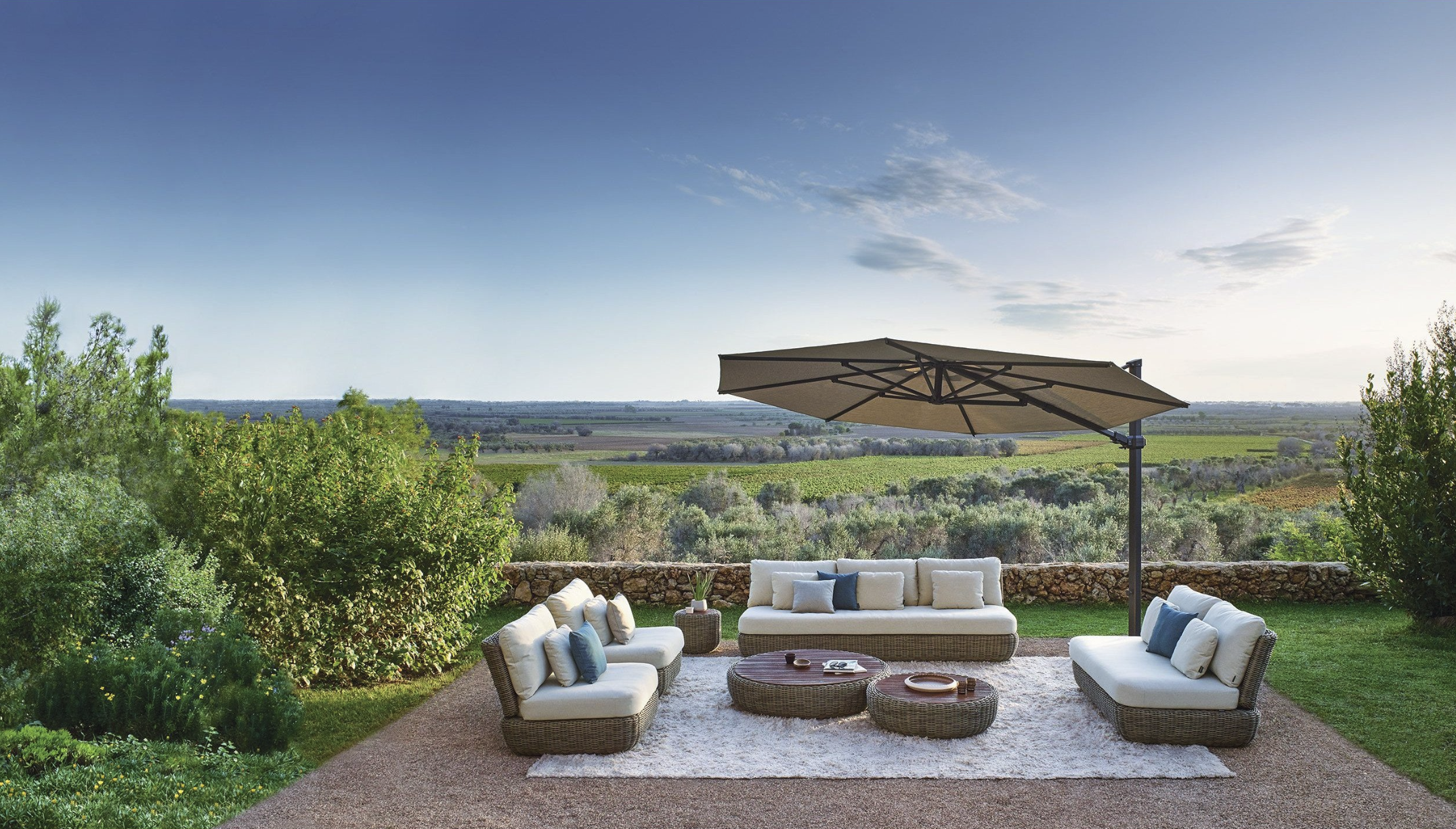
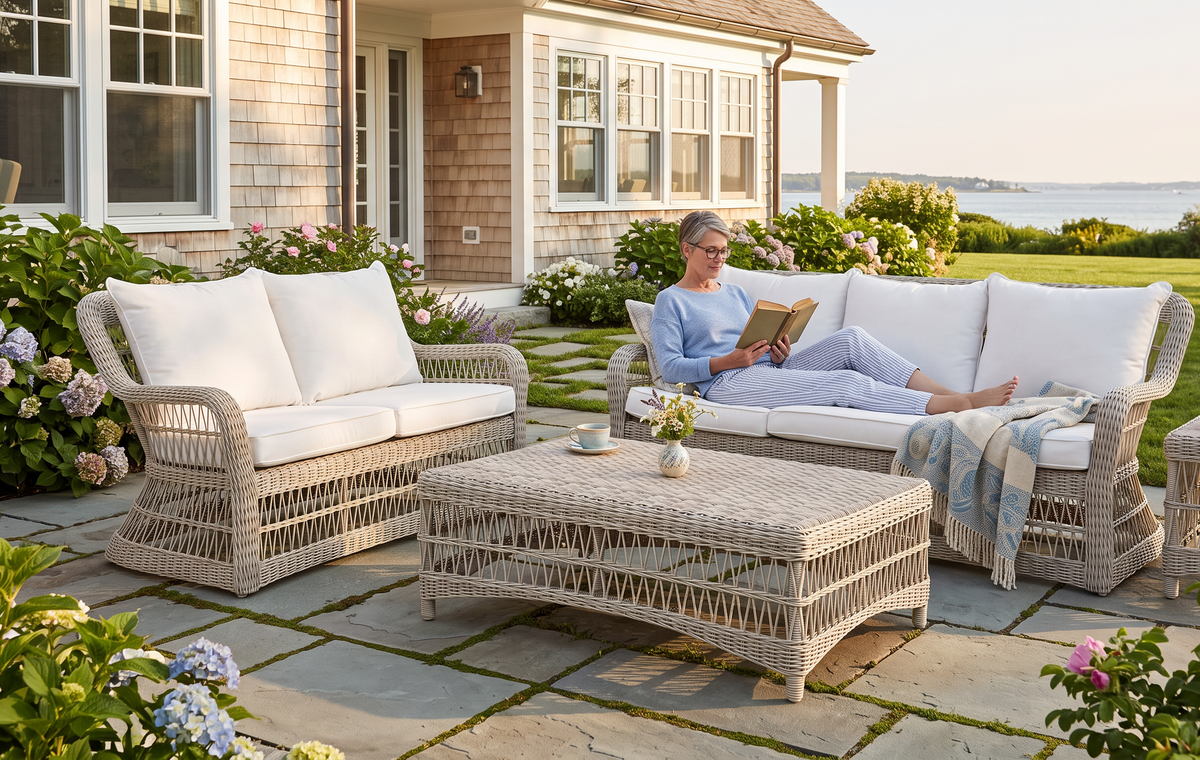
Not every space wants a pair of lounge chairs, either. An outdoor sofa suits a bigger group. A chaise suits a spot by the pool, where lying flat matters more than sitting upright. None of these is the right answer on its own. That depends entirely on what the space is for.

Keeping Them Looking New
A cover during storms and the off-season protects the frame and cushions from the weather that ages them fastest.
Turn each chair a quarter turn every couple of months, so the sun hits it evenly. Skip that, and one side fades a shade lighter — you won't notice until the day you compare them and wonder why they don't quite match.
That's really it. A well-built pair asks for almost nothing. It's the ones built poorly that turn into a project.
Frequently Asked Questions
How far apart should two lounge chairs sit?
About three feet. Enough for a small table between them. Closer, and they crowd each other.
Do the two chairs need to match exactly?
It's the easier route. For variety, keep the frames identical and vary only the cushions. The pair still holds together.
What's the most durable wood for outdoor lounge chairs?
Teak has led for decades. Robinia rivals it in hardness at a lower cost, grows in European forests instead of tropical ones, and needs no chemical treatment to survive outdoors.
Can they stay outside all winter?
A dense hardwood frame usually can. The cushions can't. Bring those in, whatever the frame is made of.
Is a good pair worth the extra cost over cheap ones?
Run the math over five years. A solid pair almost always costs less than replacing cheap chairs twice — and you're not hunting for a matching pair again in the middle of July.
Explore our lounge chair collection, built to still be out there in ten years.
Explore More