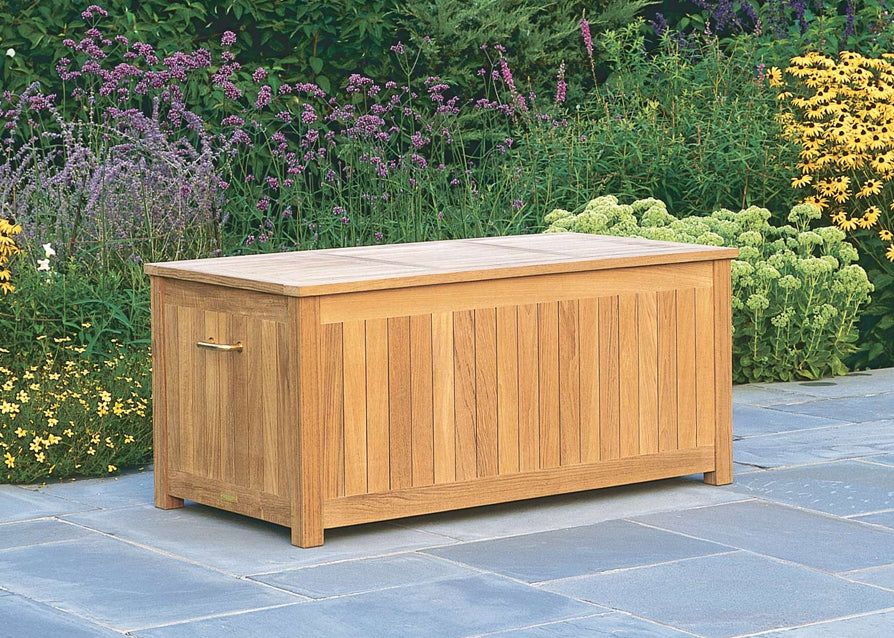

Best Outdoor Sectionals for Big Patios & Large Gatherings
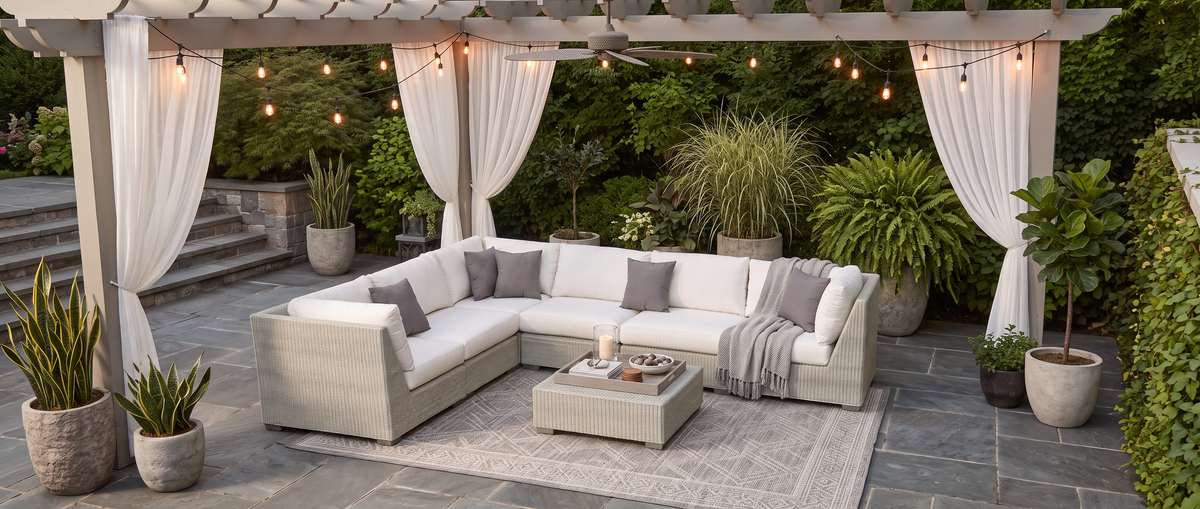
TL;DR: A great outdoor sectional turns a big patio into the place everyone wants to be — deep enough to nap in, long enough to seat the whole family and built to hold up to sun, rain and years of Sunday afternoons. This guide walks through what to look for in an outdoor sectional, how to size one for a big space and the brands we recommend most.
The best outdoor sectionals seat a group generously and hold up for a decade. Everything else is preference. The rest of this guide walks you through the preferences worth paying attention to.
At Frontera we've spent thirty years helping people choose outdoor sectionals that hold up through a decade of summers and still feel like the piece the family gathers around. What follows is how we think about picking the right one.
What Separates a Sectional You Keep From One You Replace
A great outdoor sectional does three things well. It seats a crowd without feeling crowded. It's a cohesive design addition to your outdoor space. And the cushions hold their shape and comfort through years of sun, salt or humidity.
That third one is where cheaper sectionals fall apart first. A sectional that sags after one summer is a sectional you'll be replacing before your third. The good ones use dense, quick-dry foam wrapped in solution-dyed acrylic, the kind of construction resort furniture makers have used for decades.

What Configuration Fits Your Space Best
Outdoor sectionals come in three main shapes, and picking the right one starts with looking at your patio and asking where the sun and the view already sit.
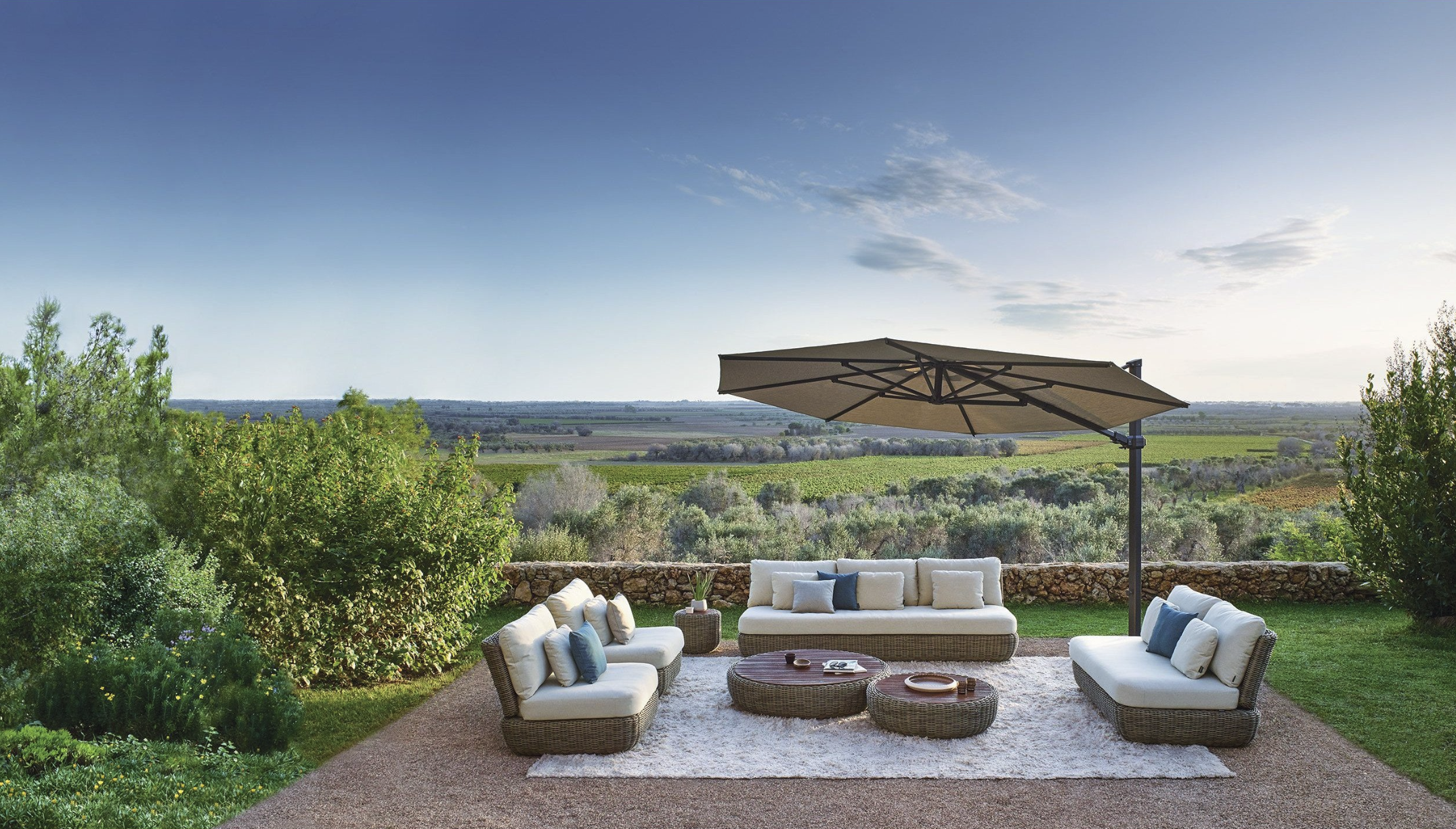
L-shape. The most versatile choice. Two straight runs of seating meeting at a right angle. Tucks against a corner of the patio or floats mid-space with a coffee table anchoring the L. Works for patios of every size but shines on 12x14 to 16x20 spaces.
U-shape. Two facing runs plus a connecting run, so everyone in the group can see everyone else. This is the piece for large gatherings, family reunions and holiday weekends when the couch becomes the conversation. Needs 18x18 or more.
Modular. Individual seats and corners that reconfigure as you want. The right pick if your patio hosts different-sized groups through the season — six people for a Tuesday dinner, twenty for the Fourth of July.
The Material Decision
Sectional frames come in three families, each with a specific home.
Teak is the resort standard. Dense, oil-rich and resistant to rot, teak weathers to a soft silver over decades. A teak sectional from a maker like Kingsley Bate or Barlow Tyrie is the piece your kids will inherit still looking beautiful. The most expensive material up front and the one that pays back over thirty years.

Aluminum is the right pick for coastal homes or minimal modern spaces. Powder-coated aluminum shrugs off salt air, holds its color for years and is light enough to reconfigure without a second person. Woodard builds aluminum sectional lines with the frame weight of hospitality furniture, which is what you want in a piece you plan to keep.
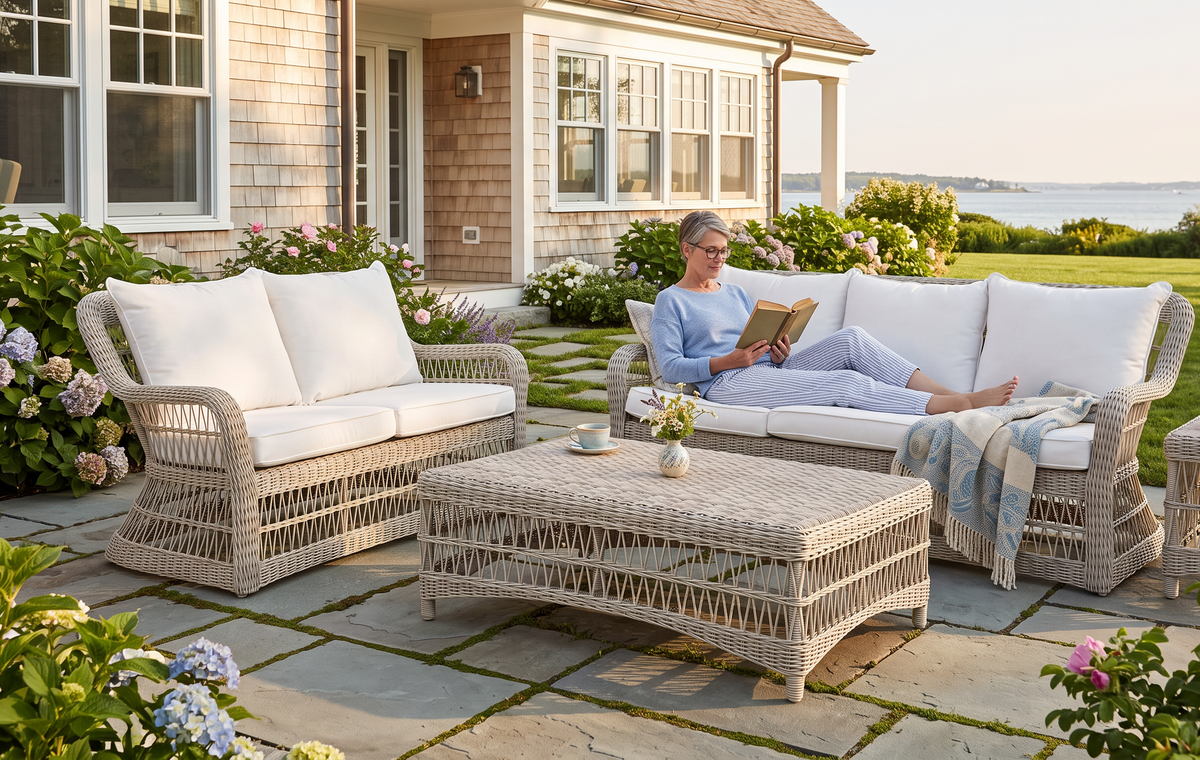
All-weather wicker is what you notice at the pool decks you remember from a great vacation. Synthetic resin woven over an aluminum frame, deep-cushioned, sculptural and comfortable for hours of use. The look most clients ask for when they want their backyard to feel like the resort they just got back from.
The Cushions Matter
Depth. A cushion less than four inches thick is a cushion you'll feel the frame through by hour two. The best sectional cushions are five to six inches, with dense foam that doesn't compress into a permanent memory of you.
Fabric. Solution-dyed acrylic resists sun-fade, mildew and stain. Sunbrella is the industry standard for a reason. A cheap outdoor fabric will fade within a summer; a Sunbrella cushion will still look good in year eight.
Removable covers. Zippered covers you can pull off and hose down are the difference between a cushion that gets used and a cushion you're afraid to sit on with sunscreen.
Sizing for a Big Patio
The most common sectional mistake we see is buying too small for the space. A sectional that looks huge in a showroom floats awkwardly in a 20x20 patio with a pergola overhead.
Two rules help.
Give the sectional at least three feet of clearance behind it and four feet in front for foot traffic and a coffee table. That's the working envelope of the piece, not just the piece itself.
Match the depth to the scale. A patio with a pergola or fifteen-foot ceilings wants a deep, low-slung sectional that reads generous. A tighter patio with a five-foot overhang wants a chair-height sectional you don't have to climb into. The proportions should feel like they were made for the space, not squeezed into it.

Frequently Asked Questions
What size outdoor sectional do I need for my patio?
Measure the patio and subtract three feet from every side for traffic and clearance. That's your working footprint. For most patios in the 12x14 to 20x20 range, an L-shape sectional between 100 and 140 inches on the longer run works well. Above 20x20, look at a U-shape or a modular configuration you can spread out and reconfigure.
What's the best material for an outdoor sectional?
Depends on the climate and the aesthetic. Teak lasts longest and looks most traditional. Aluminum handles coastal salt air best and reads modern. All-weather wicker gives you the resort look and the deepest cushioned comfort. If we could only pick one, teak — because a well-made teak sectional will outlast every other decision you make about your outdoor space.
How do I keep an outdoor sectional dry in the rain?
Bring cushions inside or stand them on end during heavy rain. Waterproof outdoor fabric still needs to dry, and a cushion sitting flat in a puddle will mildew. For the frames, teak, aluminum and all-weather wicker all handle rain without issue. Use a fitted cover during long storage stretches. That's most of the routine.
Should I choose a modular sectional or a fixed one?
Modular if the group size changes a lot — hosting twenty guests one weekend and two people the next. Fixed if you know exactly how the space will be used and want the tightest, most sculptural look. Modular is more forgiving. Fixed is more architectural.
How much should a good outdoor sectional cost?
Between $3,500 and $12,000 for a piece that'll last more than a decade. The lower end gets you a solid aluminum-framed all-weather wicker sectional. The upper end gets you a full teak U-shape with high-end Sunbrella cushions. Below $2,000 you're usually buying a sectional you'll be replacing before the third summer.
Bring the Resort Home
The best outdoor sectional is the piece that gets used most and photographed least — the one your friends and family end up on after dinner without thinking about it, night after night, summer after summer. Frontera has spent over three decades helping design outdoor collections built for exactly this. From teak sectionals that outlast the family that bought them to all-weather wicker pieces that read like a Caribbean resort in a New England backyard, what we carry is what we'd put in our own homes.
Explore More